








What's Happening?
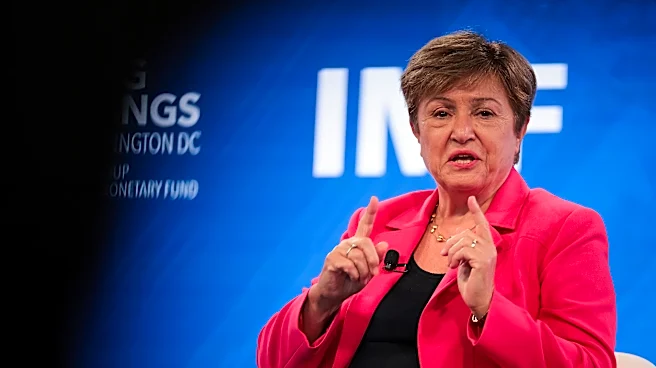
The International Monetary Fund (IMF) has reduced its economic growth forecast for Australia in 2026 to 1.9 percent. This downgrade indicates a more subdued outlook for the Australian economy compared to previous projections. According to economists,
this revised forecast could be viewed as positive news for the Reserve Bank of Australia (RBA) in its ongoing efforts to combat inflation. A slower economic growth rate might alleviate inflationary pressures, potentially influencing the RBA's monetary policy decisions. The IMF's assessment reflects its analysis of various economic factors impacting Australia's performance in the coming year.
Why It's Important?
This downgrade in Australia's economic growth forecast by the IMF carries significant implications for global economic stability and U.S. economic interests. A slower-growing Australian economy could impact global trade flows, particularly in commodities, given Australia's role as a major exporter. For U.S. businesses with investments or trade relationships in Australia, this could mean reduced demand for goods and services, potentially affecting their revenues and expansion plans. From a monetary policy perspective, if slower growth helps the RBA control inflation, it could provide a model or context for other central banks, including the U.S. Federal Reserve, grappling with similar challenges. However, prolonged subdued growth in a major economy like Australia could also signal broader global economic headwinds, indirectly affecting U.S. economic outlooks and investor confidence.
What's Next?
The Reserve Bank of Australia will likely closely monitor the economic data and the implications of this revised growth forecast for its inflation targets. The RBA's future interest rate decisions could be influenced by the prospect of slower economic activity helping to cool inflation. Australian policymakers may consider fiscal measures to stimulate growth or support specific sectors if the economic slowdown becomes more pronounced. For U.S. investors and businesses, it will be crucial to observe the RBA's policy responses and any new economic initiatives from the Australian government to assess potential impacts on their operations and investments in the region. The global economic community will also be watching to see if Australia's experience with slower growth and inflation control offers lessons for other developed economies.
Beyond the Headlines
The IMF's revised forecast for Australia highlights the delicate balance central banks face between managing inflation and sustaining economic growth. The idea that slower growth could be 'good news' for the RBA underscores the current global economic environment where inflation remains a primary concern. This situation could lead to a re-evaluation of economic policies, potentially favoring stability over aggressive growth. For the U.S., this scenario in Australia could serve as a case study for how a developed economy navigates disinflationary pressures without triggering a severe downturn. It also points to the interconnectedness of global economies, where a forecast change in one major country can have ripple effects on international trade, investment, and monetary policy discussions worldwide.