








What's Happening?
Candy manufacturers in the U.S. are implementing new strategies to manage rising ingredient costs, which have led to a significant increase in candy prices. According to CoBank food analyst Billy Roberts, candy prices have surged by approximately 70%
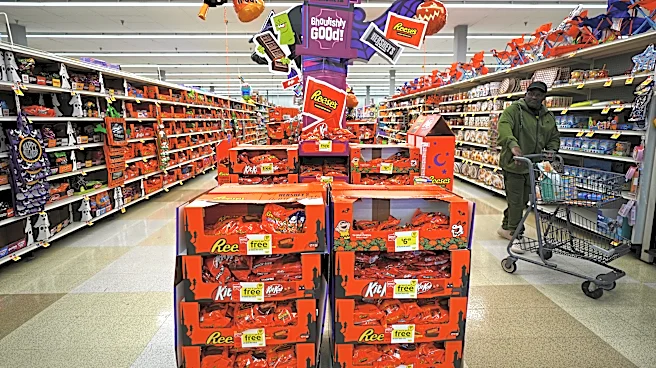
over the past five years. This increase is prompting changes in the types and sizes of candy products available to consumers, particularly for holidays like Halloween and Christmas. Roberts notes that brands are increasingly resorting to 'inclusions and reformulations' and offering 'smaller package sizes' to offset the price shocks experienced by consumers. This means shoppers may encounter fewer full-size candy bars this Halloween season as manufacturers adjust their offerings to maintain affordability and profitability.
Why It's Important?
The rising cost of candy ingredients and the subsequent price increases have significant implications for both consumers and the confectionery industry in the U.S. For consumers, it means potentially paying more for less candy, especially during peak seasons like Halloween, which could impact purchasing habits and holiday traditions. For candy manufacturers, these cost pressures necessitate innovative approaches to production and packaging. The shift towards smaller package sizes, often referred to as 'shrinkflation,' allows companies to maintain a perceived lower price point while effectively increasing the unit cost. This strategy is crucial for managing profit margins in the face of volatile commodity prices and supply chain challenges, ensuring the continued availability of popular candy products despite economic headwinds.
What's Next?
Consumers can expect to see a continued trend of smaller candy sizes and potentially higher prices for confectionery products in the coming holiday seasons. Candy manufacturers will likely continue to explore various cost-saving measures, including ingredient substitutions, new product formulations, and optimized packaging. The industry may also invest in more efficient production processes to mitigate rising operational costs. Retailers will need to adapt their inventory and pricing strategies to align with these changes, potentially offering a wider variety of package sizes and price points to cater to different consumer budgets. The long-term impact could include a permanent shift in consumer expectations regarding candy portion sizes and pricing, as well as increased innovation in the confectionery sector to find more cost-effective ingredients and production methods.
Beyond the Headlines
The adaptation of candy brands to rising ingredient costs reflects broader economic pressures affecting the food industry, including inflation, supply chain disruptions, and increased raw material expenses. This situation highlights the delicate balance manufacturers must strike between maintaining product quality, managing costs, and meeting consumer expectations. The phenomenon of 'shrinkflation' is not unique to candy but is a widespread response across various consumer goods sectors, raising questions about transparency in pricing and packaging. This trend could also influence public health discussions, as smaller portion sizes, while driven by economic factors, might inadvertently align with efforts to promote moderation in consumption. Ultimately, it underscores the complex interplay between economic forces, corporate strategy, and consumer behavior in the U.S. market.