





What's Happening?
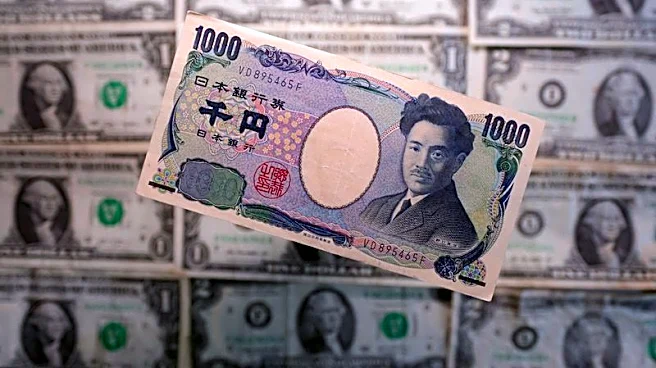
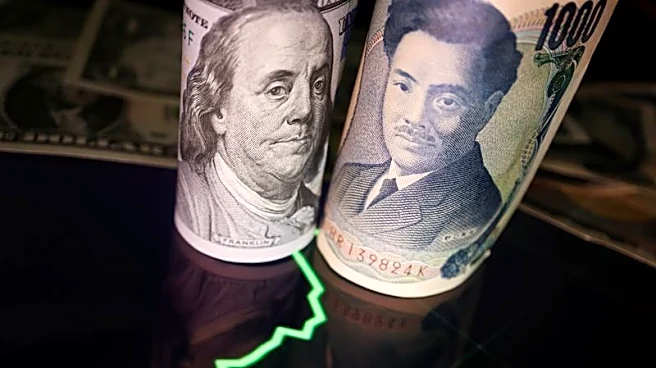
The United States and Japan have jointly intervened in the currency markets to strengthen the yen, marking the first such collaboration since 2011. This intervention comes as the yen has been experiencing a historic decline against the U.S. dollar. The coordinated
effort led to a significant drop in the dollar-yen exchange rate, with the yen strengthening from nearly 164 to as low as 155 against the dollar. The intervention aims to stabilize the yen as Japanese interest rates begin to rise, narrowing the gap with U.S. rates. This move is part of a broader strategy to manage the currency's adjustment without causing market disorder.
Why It's Important?
The joint intervention by the U.S. and Japan in the currency markets is a significant development in international finance, reflecting concerns over the yen's rapid depreciation. A weaker yen can impact global trade dynamics, affecting Japanese exports and the competitiveness of U.S. goods. The intervention also highlights the interconnectedness of global financial markets and the potential for coordinated actions to address currency volatility. For investors and businesses, the move signals a commitment by major economies to maintain stability in the foreign exchange markets, which can influence investment decisions and economic forecasts.
What's Next?
Following the intervention, market participants will closely monitor the yen's performance and any further actions by the U.S. and Japanese authorities. The effectiveness of the intervention will depend on the yen's ability to maintain its strengthened position and the broader economic conditions influencing currency markets. Additionally, the intervention may prompt discussions among other countries about their own currency policies and potential collaborative efforts to address similar issues. The situation could lead to further diplomatic engagements between the U.S. and Japan to ensure ongoing economic stability.