







What's Happening?
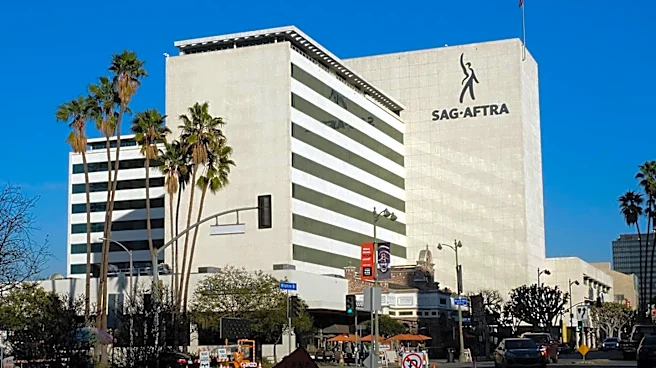
SAG-AFTRA has announced the promotion of Duncan Crabtree-Ireland from National Executive Director to CEO, alongside a contract extension that will keep him in the role through June 2032. This decision, approved with over 98 percent support from the SAG-AFTRA national
board, signifies a strong vote of confidence in his leadership. Crabtree-Ireland, who has been with the union for over 25 years, will also continue in his capacity as chief negotiator. SAG-AFTRA President Sean Astin issued a statement praising Crabtree-Ireland's expertise in bargaining and operational management, highlighting his success in leading the union at negotiation tables, in Congress, and across the industry globally. Crabtree-Ireland expressed his gratitude, emphasizing his commitment to fighting for human creativity and ensuring members control their image, likeness, voice, and destiny in the workplace, while being fairly compensated.
Why It's Important?
This leadership change and contract extension for Duncan Crabtree-Ireland at SAG-AFTRA is significant for the entertainment industry, particularly as it navigates rapid technological advancements and evolving labor dynamics. Crabtree-Ireland's continued role as chief negotiator is crucial for future collective bargaining agreements with major studios and production companies. His focus on members' control over their image, likeness, voice, and fair compensation directly addresses key concerns in an era of artificial intelligence and digital content creation. This move signals the union's intent to maintain strong, experienced leadership to advocate for its members' rights and economic well-being against powerful global corporations. The stability in leadership could lead to more consistent and assertive negotiations, potentially influencing industry standards for talent compensation and intellectual property rights. This impacts not only actors and performers but also the broader ecosystem of content creation and distribution in the U.S.
What's Next?
With Duncan Crabtree-Ireland's contract extended until 2032 and his elevation to CEO, SAG-AFTRA is poised for continued assertive negotiations and advocacy on behalf of its members. The union will likely focus on upcoming bargaining cycles, particularly those addressing the impact of artificial intelligence on performers' rights and compensation. Crabtree-Ireland's stated commitment to ensuring members control their image, likeness, voice, and destiny suggests that these issues will be central to future discussions with studios and production companies. The industry can anticipate a sustained push for stronger protections and fair compensation models in the digital age. This long-term leadership stability also means that the union will likely maintain a consistent strategy in its engagement with Congress and other regulatory bodies regarding industry policies and incentives. Stakeholders, including studios, streaming platforms, and other entertainment unions, will be closely watching SAG-AFTRA's next moves under this reinforced leadership.
Beyond the Headlines
The promotion of Duncan Crabtree-Ireland to CEO and his extended contract underscore a deeper strategic shift within SAG-AFTRA to confront the challenges posed by rapidly advancing technology, particularly artificial intelligence, in the entertainment industry. This move reflects a recognition that the traditional bargaining frameworks may no longer be sufficient to protect the rights and livelihoods of performers. The emphasis on members controlling their 'image, likeness, voice, and destiny' highlights the ethical and legal complexities arising from AI's ability to replicate and manipulate human performances. This long-term commitment to a seasoned negotiator like Crabtree-Ireland suggests the union is preparing for protracted and complex battles over intellectual property, digital rights, and fair compensation in an increasingly automated creative landscape. This could set precedents not only for the entertainment sector but also for other industries grappling with the implications of AI on human labor and creativity, potentially influencing broader societal discussions on the future of work and artistic integrity.