









What's Happening?
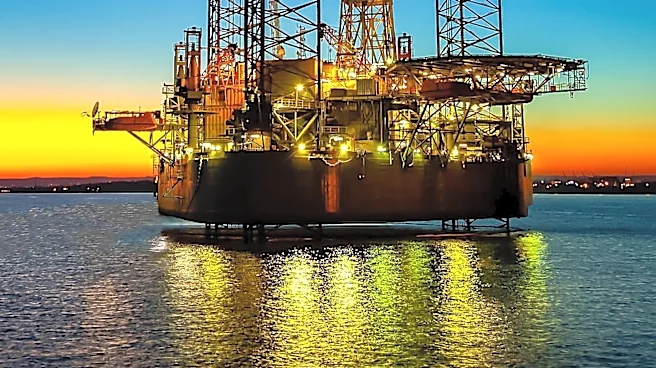
The United States has solidified its position as the world's leading oil producer, surpassing both Russia and Saudi Arabia. This achievement is largely attributed to the shale revolution and increased production in the Permian Basin. In 2025, U.S. crude
oil and condensate production averaged 13.586 million barrels per day, accounting for 15.8% of global production. This marks a significant increase from previous years, despite geopolitical tensions such as the U.S.-Iran war and Ukrainian drone strikes on Russian energy assets. The U.S. Energy Information Administration (EIA) forecasts continued growth, with production expected to reach above 14 million barrels per day in 2027. Additionally, U.S. petroleum exports have reached record highs, driven by increased demand due to the Strait of Hormuz crisis.
Why It's Important?
The U.S.'s dominance in oil production has significant implications for global energy markets and geopolitical dynamics. By leading in oil output, the U.S. strengthens its energy independence and reduces reliance on foreign oil, which can influence international relations and trade policies. The increased production and export capacity also provide the U.S. with leverage in global energy negotiations, potentially affecting OPEC+ strategies and pricing. Furthermore, the U.S.'s ability to supply oil during geopolitical crises, such as the tensions in the Middle East, enhances its role as a stabilizing force in global energy markets.
What's Next?
The U.S. is expected to continue expanding its oil production capabilities, particularly in the Permian Basin. This growth is likely to influence global oil prices and may lead to shifts in OPEC+ production strategies. Additionally, the ongoing geopolitical tensions in the Middle East could further impact U.S. oil exports and international energy policies. Stakeholders, including U.S. energy companies and international partners, will closely monitor these developments to adapt their strategies accordingly.