




What's Happening?
Celebrity chef Giada De Laurentiis has revealed an unconventional method for plating pasta to achieve a restaurant-quality presentation. In a YouTube clip, De Laurentiis demonstrates how to use a carving fork and a serving spoon to create a perfectly
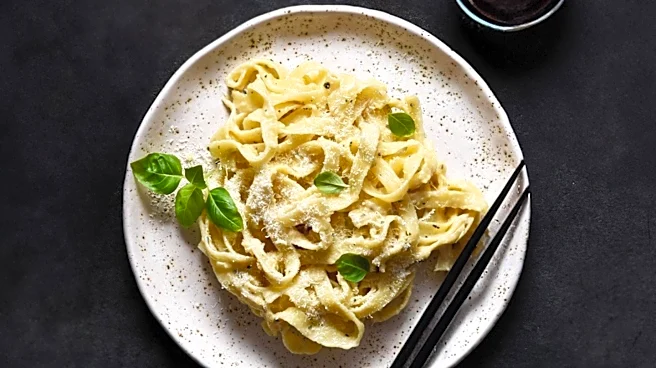
swirled mound of pasta. She places the carving fork upright in the center of sauced pasta, twirls it to wrap the noodles around the tines, and then uses a serving spoon underneath to transfer the pasta to a plate, ensuring it maintains its shape. This technique is particularly effective for long, thin pasta varieties like spaghetti, angel hair, and bucatini, but can also be applied to thicker pastas such as fettuccine and tagliatelle, provided the noodles are long enough to twist. For those without a carving fork, tongs can be used as an alternative.
Why It's Important?
This simple yet effective plating technique shared by Giada De Laurentiis holds significance for home cooks and the broader culinary community. It democratizes restaurant-level presentation, making it accessible to a wider audience without requiring specialized tools. By elevating the visual appeal of home-cooked meals, it can enhance the dining experience and encourage more people to engage with cooking as an art form. For the food industry, such tips from influential chefs can drive sales of specific kitchen utensils or even inspire new product designs. Furthermore, it highlights the ongoing influence of celebrity chefs in shaping culinary trends and practices among the general public, demonstrating how practical advice can quickly disseminate through digital platforms and impact everyday cooking habits. This emphasis on presentation also reflects a growing consumer interest in the aesthetic aspects of food.
What's Next?
The sharing of such practical culinary tips by prominent figures like Giada De Laurentiis is likely to continue influencing home cooking practices. Expect to see an increase in social media content and cooking tutorials demonstrating this specific plating method, as home cooks and food bloggers adopt and adapt the technique. Kitchenware manufacturers might see a renewed interest in carving forks or multi-purpose tongs, potentially leading to marketing campaigns highlighting their utility for pasta plating. Additionally, other chefs may be inspired to share their own 'secret' techniques, further enriching the online culinary landscape. This trend underscores the power of digital platforms in disseminating culinary knowledge and fostering a more engaged and skilled community of home cooks.
Beyond the Headlines
Beyond the immediate utility of plating pasta, De Laurentiis's tip touches on a deeper cultural appreciation for food presentation. In an age dominated by visual media, the aesthetic appeal of food has become almost as important as its taste. This technique taps into the desire for 'Instagrammable' meals, reflecting how social media influences our culinary aspirations and practices. It also subtly reinforces the idea that cooking is not just about sustenance but also about artistry and experience. The use of common kitchen tools for sophisticated results challenges the notion that gourmet cooking requires expensive equipment, making high-end culinary aesthetics more attainable. This trend could foster a greater sense of pride and creativity in home cooking, transforming everyday meals into special occasions.