






What's Happening?
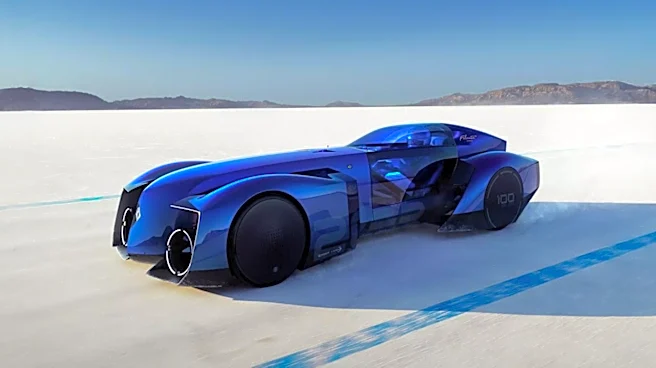
British driver Andy Green, known for being the first person to break the sound barrier in a car, is attempting to set a new land speed record at the Bonneville Salt Flats in Utah. Green, who previously set a diesel-powered car record at 350.092 mph, is now driving
a hydrogen-powered vehicle called the JCB Hydromax. This car, developed by British construction equipment manufacturer JCB, is powered by two hydrogen internal combustion engines. Green aims to surpass the current hydrogen internal combustion engine speed record of 185.5 mph and the electric vehicle record of 341.3 mph. His recent practice run reached a speed of 368.347 mph. The attempt is scheduled to take place in front of the Fédération Internationale de l’Automobile, the international governing body of motor sports.
Why It's Important?
This attempt highlights the potential of hydrogen as a clean-energy alternative in the automotive industry. JCB's investment in hydrogen technology, amounting to over $134 million, underscores the growing interest in sustainable energy solutions. If successful, Green's record could demonstrate the viability of hydrogen-powered vehicles, potentially influencing future automotive designs and energy policies. The endeavor also addresses the challenges of hydrogen production, as JCB has committed to using green hydrogen, which is produced using renewable energy sources. This could pave the way for broader adoption of hydrogen technology in heavy industries, offering a cleaner alternative to fossil fuels.
What's Next?
If Green successfully sets a new record, it could lead to increased interest and investment in hydrogen technology. The automotive industry may see a shift towards developing more hydrogen-powered vehicles, especially for heavy-duty applications. Additionally, the success of this attempt could prompt further research into improving hydrogen production methods to make them more sustainable and cost-effective. Stakeholders in the energy sector might also explore partnerships to expand the infrastructure needed for hydrogen fuel distribution.