





What's Happening?
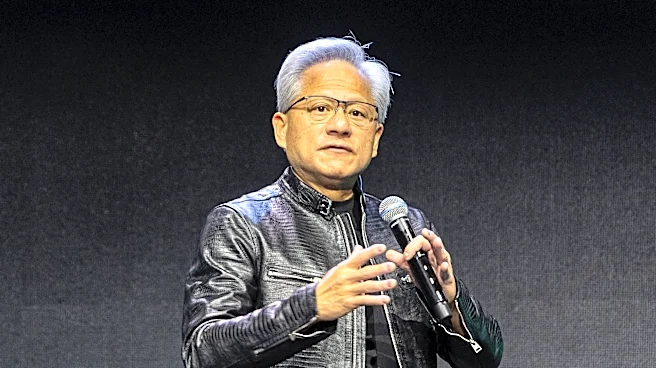
Nvidia's board has begun the search for a new CEO following the resignation of founder Jensen Huang. The company, a leader in the AI boom and one of the world's most valuable, faces significant challenges including high expectations, increasing competition,
and geopolitical pressures. The new CEO will inherit a role notoriously difficult for successors of founders. A 2024 Spencer Stuart analysis revealed that 21% of CEOs replacing founder-CEOs between 2015 and 2022 departed within two years, compared to 16% of all S&P 1500 CEOs in the same timeframe. Founders often serve for extended periods, averaging 21 years, and frequently remain involved post-CEO, with 45% staying on as board chair, making it challenging for new leadership to establish their own direction. The board is considering both internal and external candidates for the position.
Why It's Important?
The transition at Nvidia is critical given its pivotal role in the artificial intelligence sector and its substantial market valuation. The success or failure of the new CEO could significantly impact the trajectory of AI development and the broader technology market. The challenges are compounded by the 'founder's shadow' phenomenon, where the legacy and continued influence of a founder can hinder a successor's ability to lead effectively. This situation highlights a common dilemma in corporate governance: balancing the need for fresh leadership with the enduring impact of a visionary founder. The outcome at Nvidia could set a precedent for how other tech giants manage leadership transitions, especially those with highly influential founders. The company's performance under new leadership will be closely watched by investors, competitors, and the tech community, potentially influencing investment trends and strategic decisions across the industry.
What's Next?
Nvidia's board will continue its search for a new CEO, evaluating both internal and external candidates. The chosen successor will face the immediate task of navigating the company's high growth expectations, intense competition in the AI market, and complex geopolitical dynamics. The new leader will also need to address the challenge of stepping into the shoes of a highly revered founder, potentially needing to earn the trust of long-time employees and stakeholders who remain loyal to Huang. The company's future strategic direction, particularly in AI infrastructure and development, will be shaped by the new CEO's vision. The market will be keenly observing the selection process and the initial actions of the new leadership for indications of stability and continued innovation.
Beyond the Headlines
The leadership transition at Nvidia underscores a broader trend in the technology sector where the departure of iconic founders presents unique challenges for corporate succession. The 'Jensen Huang problem' illustrates the deep personal and organizational ties that founders often cultivate, making it difficult for successors to forge their own identity and command similar loyalty. This situation raises questions about the long-term sustainability of founder-led companies and the mechanisms for effective leadership handovers. It also highlights the psychological impact on employees and the corporate culture when a charismatic founder exits. The ability of the new CEO to not only manage the business but also to navigate the emotional and cultural landscape left by Huang will be a critical factor in their success, potentially influencing how future generations of tech companies approach founder transitions.