






What's Happening?
United Airlines has reported a robust financial performance in the second quarter, achieving a profit of $805 million and generating $17.7 billion in total operating revenue, marking a 16% increase from the previous year. This comes despite the airline
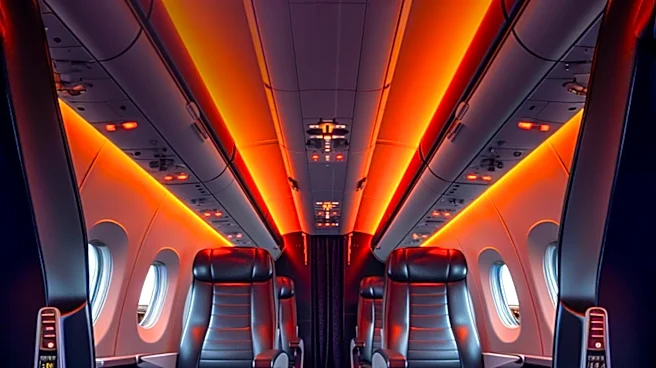
facing a projected $6 billion in additional fuel expenses for the year. The company has managed to offset approximately half of these fuel costs in the second quarter and anticipates recovering 80% to 90% in the third quarter. United has also raised its full-year adjusted earnings guidance to $9–$11 per share, driven by a 12% increase in yields and industry-wide capacity discipline. To attract more high-spend travelers, United is introducing new fare tiers and cabin configurations.
Why It's Important?
The financial resilience demonstrated by United Airlines highlights the airline industry's ability to adapt to rising operational costs, particularly fuel expenses, through strategic pricing and capacity management. The airline's success in offsetting significant fuel costs through higher fares and strong travel demand underscores the sector's pricing power and the relatively inelastic demand for air travel. This development is significant for investors and stakeholders in the airline industry, as it suggests that airlines can maintain profitability even in the face of rising costs. Additionally, United's focus on capturing high-spend travelers through innovative fare structures and cabin offerings could set a precedent for other airlines seeking to enhance revenue streams.
What's Next?
United Airlines plans to continue its strategy of offsetting fuel costs through higher fares and capacity management. The introduction of new fare tiers and cabin configurations is expected to attract more premium travelers, potentially boosting revenue further. The airline's ability to recover a significant portion of its fuel expenses in the upcoming quarters will be closely monitored by industry analysts and investors. Additionally, the broader airline industry may observe United's strategies as a model for navigating similar challenges, particularly if fuel prices remain volatile.