







What's Happening?
Germany's automotive industry experienced a substantial decline in employment, shedding 42,300 jobs in the first half of the year, reaching its lowest level since 2005. This represents a 5.8% reduction in the workforce within the sector. The broader manufacturing
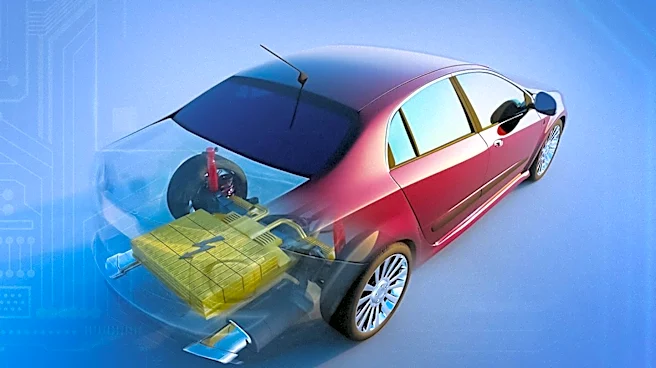
industry also saw a 2.7% decrease, or 144,100 jobs, during the same period. Major car manufacturers like Volkswagen reported a 30% drop in first-half net profit, and Mercedes-Benz revised its annual sales forecast downwards. Both companies cited weak demand in China and increasing competition from Chinese brands in Europe as primary factors for these financial setbacks. Thomas Puls, a senior economist at the German Economic Institute, attributed these job losses to overcapacity in Germany and the ongoing shift towards electric vehicles (EVs). German plants now produce approximately 4.2 million passenger cars annually, a decrease from about 6 million a decade ago, resulting in roughly 30% excess capacity. The transition to EVs also leads to lower profit margins for carmakers, while suppliers are affected by reduced output and the move away from traditional combustion engines.
Why It's Important?
The significant job losses and financial struggles within the German automotive sector have profound implications for the U.S. and global economy. Germany's automotive industry is a major player in the global market, and its challenges can ripple through international supply chains and investment. The increased competition from Chinese brands in Europe and the decline in profits from the Chinese market highlight a shifting global automotive landscape. This trend could impact U.S. automotive manufacturers and suppliers, particularly those with operations or significant market shares in Europe or China. The shift to electric vehicles, while a global imperative, is also creating economic disruption, as evidenced by lower margins and overcapacity in traditional manufacturing hubs. This situation underscores the need for U.S. companies to adapt to evolving market dynamics, including the rise of new competitors and the transition to sustainable technologies. The challenges faced by German carmakers could also influence trade policies and investment strategies between the U.S., Europe, and China, as countries seek to protect their domestic industries and secure future economic growth.
What's Next?
Industry groups in Germany are warning that the situation could worsen, suggesting further job losses and financial pressures are anticipated. The German government and automotive industry will likely need to strategize on how to address the overcapacity issue and accelerate the transition to electric vehicle production more profitably. This could involve significant investments in new technologies, retraining programs for workers, and potential consolidation within the industry. The increasing competition from Chinese brands in Europe may prompt European policymakers to consider new trade measures or industrial policies to support domestic manufacturers. For U.S. companies, this situation could present both challenges and opportunities. They may face similar competitive pressures in their own markets or find new avenues for collaboration or market entry as the global automotive landscape continues to evolve. The ongoing shift in global automotive power dynamics will likely lead to continued adjustments in manufacturing strategies, supply chain management, and international trade relations.
Beyond the Headlines
The struggles of the German automotive industry extend beyond immediate financial and employment figures, touching upon deeper shifts in global economic power and technological leadership. For decades, Germany's automotive sector symbolized engineering excellence and economic prowess, with a business model heavily reliant on premium vehicles, intercontinental exports, and technological innovation. The current challenges, particularly from China, indicate a fundamental shaking of these pillars. This situation highlights the broader implications of China's growing industrial and technological capabilities, not just as a market but as a formidable competitor. The shift to electric vehicles, while environmentally necessary, is also a catalyst for this reordering, as it levels the playing field for new entrants and disrupts established manufacturing processes. This could lead to a re-evaluation of global trade policies and industrial strategies, as nations grapple with maintaining competitiveness in a rapidly changing technological and economic environment. The ethical dimension of job displacement and the societal impact of industrial transformation will also become increasingly prominent, requiring comprehensive policy responses to support affected communities and workers.