





What's Happening?
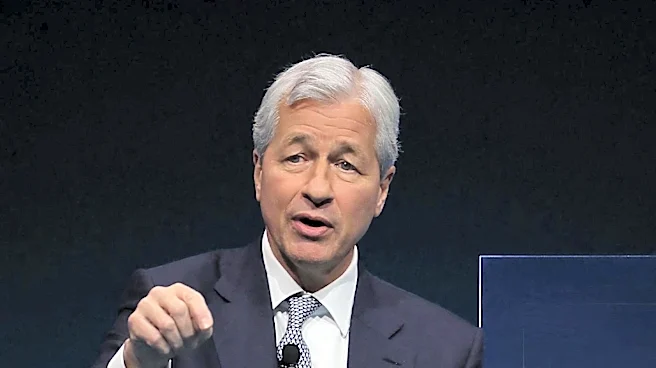
AT&T CEO John Stankey is advocating for a meeting culture where employees come prepared to share informed perspectives rather than merely observing. In a joint interview with JPMorgan Chase CEO Jamie Dimon, Stankey stated that a core principle in AT&T's
cultural documents is to avoid attending meetings without prior preparation. He expressed a desire for employees to contribute points of view built on facts, information, and data, rather than uninformed opinions. Stankey suggested that if employees are unwilling to speak up or lack constructive input, it might indicate that the right people are not present in the meeting. This approach aligns with Dimon's emphasis on productive meetings and creating an environment where employees feel comfortable raising disagreements or uncomfortable issues.
Why It's Important?
The emphasis by AT&T CEO John Stankey on preparedness and active discourse in meetings reflects a broader trend in corporate leadership aiming to enhance efficiency and innovation. By encouraging employees to come with data-driven insights and to challenge ideas, companies can foster a more dynamic decision-making process, potentially leading to better strategic outcomes. This approach can empower employees, making them feel more valued and engaged, which in turn could boost morale and productivity. However, implementing such a culture requires strong leadership to ensure that open discourse does not devolve into unproductive conflict and that all voices are heard respectfully. The success of this strategy could be a model for other large corporations seeking to optimize their internal communication and operational effectiveness, particularly in fast-evolving sectors like telecommunications.
What's Next?
AT&T's continued push for a culture of preparedness and active participation in meetings suggests an ongoing effort to refine its internal operational efficiency and decision-making processes. The company will likely continue to reinforce these principles through internal communications, leadership training, and performance evaluations. The integration of AI tools, as discussed by both Stankey and Dimon, could play a significant role in how employees prepare for meetings, potentially shifting from traditional pre-reading to more interactive, AI-assisted information gathering. The effectiveness of this cultural shift will be measured by its impact on project outcomes, employee engagement, and ultimately, the company's financial performance. Other companies may observe AT&T's experience to adapt similar strategies for fostering more productive and dynamic meeting environments.
Beyond the Headlines
The discussion between John Stankey and Jamie Dimon about meeting preparedness and the evolving role of AI in this process touches upon deeper implications for corporate culture and the future of work. The shift from passive information consumption to active, AI-assisted data synthesis for meeting preparation could redefine professional skills, emphasizing critical thinking and the ability to leverage technology effectively. This also raises questions about digital literacy and equitable access to advanced AI tools within organizations. Furthermore, the call for open discourse and challenging ideas, while beneficial for innovation, also necessitates a robust framework for psychological safety in the workplace, ensuring that employees feel secure in expressing dissenting opinions without fear of retribution. This cultural evolution could lead to more resilient and adaptable organizations capable of navigating complex challenges in a rapidly changing business landscape.