




What's Happening?
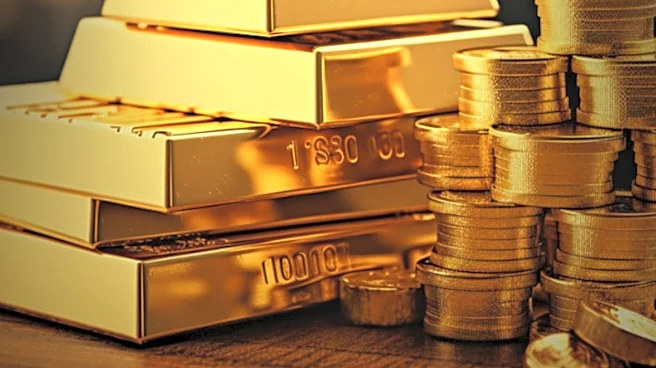
Economist Alasdair Macleod forecasts that gold could reach $8,000 an ounce within the next six months. This projection is not primarily due to an increase in gold's intrinsic value, but rather a potential sharp decline in the US dollar's value. Macleod argues
that the conventional approach of assessing gold prices, which often links them inversely to interest rates, overlooks gold's role as a store of value and a hedge against the loss of purchasing power in fiat currencies. He highlights growing risks within the US financial system, particularly the relatively low gold holdings by American investors and the possibility of an uncomfortable bear market in equities. Macleod suggests that a squeeze in market liquidity could lead to widespread selling across various asset classes as investors seek to raise cash, potentially impacting even traditionally safe assets.
Why It's Important?
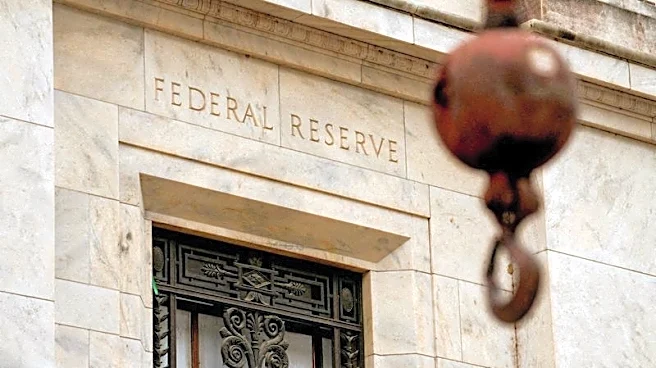
Macleod's analysis suggests a significant shift in the dynamics of the US financial market, where the stability of the US dollar is under scrutiny. A substantial weakening of the dollar could have profound implications for the US economy, affecting import and export costs, inflation, and the purchasing power of American consumers. If investors lose confidence in the dollar, as Macleod warns, it could trigger a flight to alternative assets like gold, driving its price upward. This scenario would challenge the Federal Reserve's monetary policy, forcing it to choose between supporting the dollar and maintaining broader financial system stability. Such a choice could lead to difficult decisions regarding interest rates and liquidity, with potential consequences for economic growth and market confidence.
What's Next?
Macleod anticipates that the Federal Reserve may face increasing pressure to ease financial conditions and provide liquidity if market stress intensifies. In such a situation, the priority would likely be to stabilize the economy and financial markets, even if it means a weaker dollar. However, central bank intervention to ease liquidity pressures could further erode confidence in the US currency. Macleod advises investors to reduce their exposure to credit markets and consider holding physical gold as a hedge against potential financial instability. The coming months will likely reveal whether the Federal Reserve prioritizes dollar strength or broader financial stability in its policy decisions.
Beyond the Headlines
The potential for a significant decline in the US dollar's value, as suggested by Macleod, raises deeper questions about the long-term stability of fiat currencies and the global financial architecture. It highlights the ongoing debate about the role of gold as a safe-haven asset in times of economic uncertainty. If Macleod's prediction materializes, it could signal a fundamental re-evaluation of investment strategies and a renewed focus on tangible assets. The ethical implications of central bank interventions, particularly when they might undermine currency confidence, also come to the forefront, prompting discussions about the balance between short-term economic stabilization and long-term financial integrity.