






What's Happening?
California has introduced a new incentive program, MyFirstEV, aimed at first-time electric vehicle (EV) buyers. Governor Gavin Newsom signed the bill, SB 168, into law, offering an instant incentive of $3,500 for new EVs and $1,750 for used ones at the point
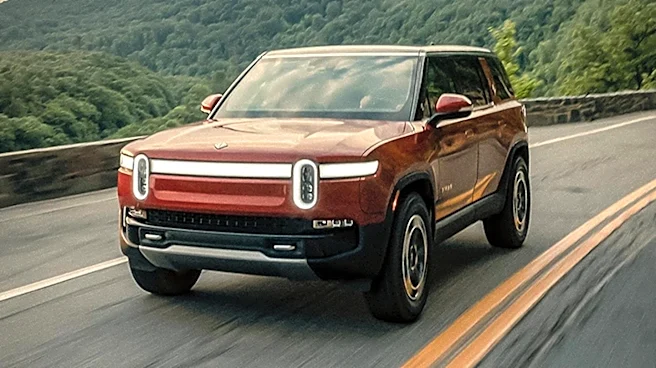
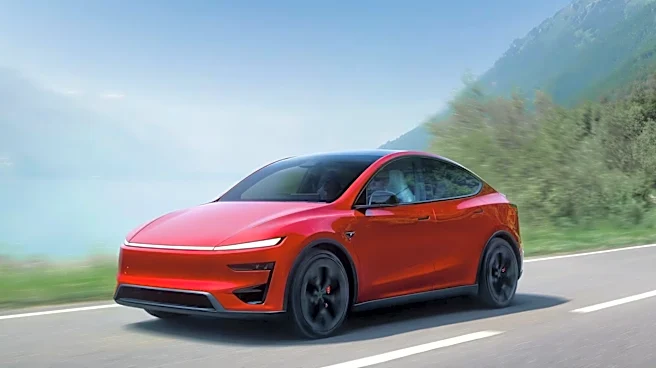
of sale. The program, expected to launch this summer, sets a price cap of $50,000 for new vehicles and $25,000 for used vehicles. However, the law provides an exemption for EV manufacturers headquartered in California that produce only zero-emission vehicles, such as Rivian and Lucid. This exemption allows these companies to participate in the program regardless of their vehicle prices, which typically exceed the set caps. Rivian, based in Irvine, and Lucid, headquartered in Newark, are positioned to benefit from this exemption. Tesla, despite its manufacturing presence in California, is excluded from the exemption due to its corporate headquarters relocation to Austin in 2021.
Why It's Important?
The MyFirstEV program represents a significant shift in California's approach to promoting electric vehicles, particularly benefiting local manufacturers like Rivian and Lucid. By exempting these companies from price caps, the state aims to bolster its clean energy industry and support local businesses. This move could enhance the competitiveness of California-based EV manufacturers against larger, more established companies like Tesla, which is subject to the price caps. The program also serves as a state-level response to the rollback of federal EV tax credits under the Trump administration, aiming to maintain California's leadership in clean energy and reduce reliance on fossil fuels. The initiative could stimulate the local economy by encouraging more consumers to purchase EVs, thereby reducing emissions and supporting environmental goals.
What's Next?
The California Air Resources Board (CARB) is expected to announce the participating automakers next month, which will clarify the program's reach and impact. As the program launches, it will be crucial to monitor how it influences consumer behavior and the market share of exempted companies like Rivian and Lucid. Additionally, the response from other automakers, particularly Tesla, will be significant, as they may adjust their strategies to remain competitive under the new incentive structure. The program's success could prompt other states to consider similar initiatives, potentially leading to broader changes in the national EV market.