






What's Happening?
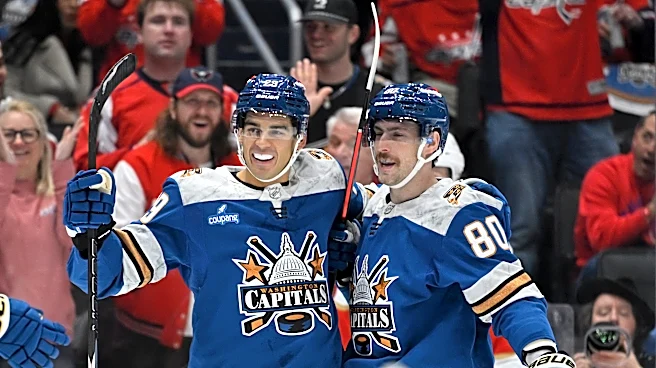
Washington Capitals player Jordan Kyrou, a Toronto native, has chosen Justin Bieber's 2015 hit 'What Do You Mean?' as his official goal song. This decision comes after Kyrou played the first 14 games of the season without a designated song. According
to RMNB, Kyrou's initial choice, 'Janice STFU' by Drake, was rejected by the Capitals, likely due to its perceived inappropriateness for a family-friendly audience. Bieber's 'What Do You Mean?' was a significant success, becoming his first song to reach No. 1 on the Billboard Hot 100. The track is characterized by a ticking-clock beat and a distinctive, high-pitched synthesizer melody, which is expected to create a memorable atmosphere in the hockey arena.
Why It's Important?
The selection of a goal song by a prominent NHL player like Jordan Kyrou holds cultural significance within the sports world, particularly for fans. It adds a personalized element to the game experience and can become an anthem associated with the player's achievements. For Justin Bieber, a Canadian artist, having his song chosen by a U.S. sports team further extends his influence into American popular culture and sports. This choice also highlights the intersection of music and sports, where popular songs are integrated into game-day entertainment, influencing fan engagement and team identity. The rejection of Kyrou's initial choice by the Capitals also underscores the importance of maintaining a family-friendly environment in professional sports, reflecting broader societal expectations for public entertainment.
What's Next?
With 'What Do You Mean?' now officially Jordan Kyrou's goal song, fans can expect to hear the track played every time he scores a goal for the Washington Capitals. This will likely lead to increased recognition of the song within the hockey community and among Capitals supporters. The integration of popular music into sports events is a continuous trend, and this instance may inspire other players to carefully consider their own goal song selections, balancing personal preference with team and league guidelines. The choice also reinforces the connection between Canadian artists and the NHL, given both Kyrou and Bieber's Toronto roots.
Beyond the Headlines
The phenomenon of athletes choosing personal goal songs or walk-up music reflects a broader trend in sports where individual personalities are increasingly integrated into the fan experience. These musical choices can become part of a player's brand and contribute to the overall entertainment value of a game. The decision-making process, as seen with the Capitals rejecting Kyrou's initial choice, also reveals the careful curation of public image by sports organizations. They aim to ensure that all elements of the game-day experience align with their brand values and appeal to a diverse audience, including families. This micro-event in sports entertainment subtly illustrates the ongoing negotiation between individual expression and corporate responsibility in professional leagues.