
What's Happening?
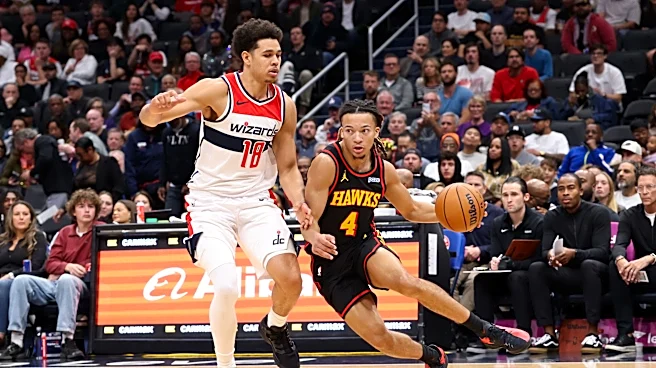
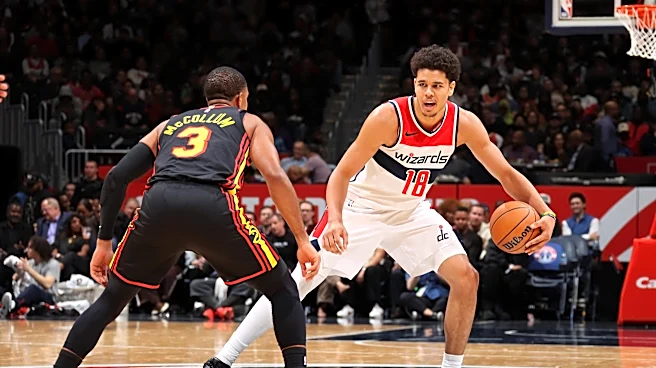
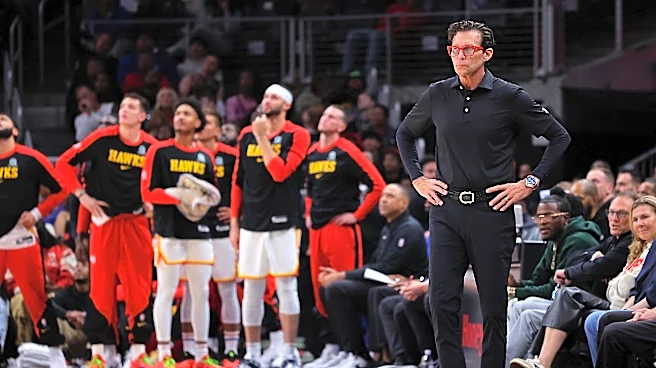
Atlanta Hawks head coach Quin Snyder defended his decision to keep CJ McCollum in a recent game against the Washington Wizards, despite McCollum shooting 1-of-10 from the field for much of the night. McCollum re-entered
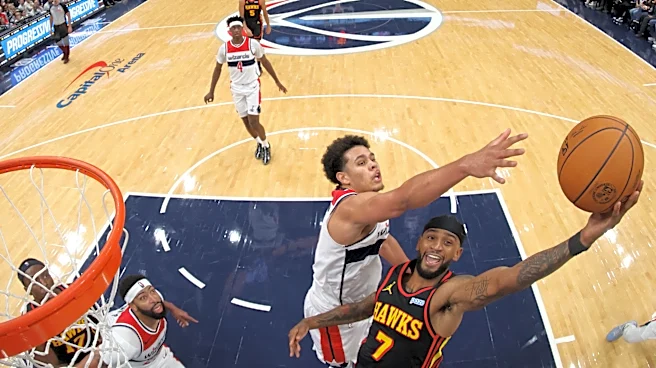
the game with 3:35 left, with Atlanta leading 124-120. Although he missed his subsequent shots, he made two crucial free throws and assisted Luguentz Dort on a three-pointer, contributing to the Hawks' 139-132 victory. Snyder emphasized that a player of McCollum's caliber should not be judged solely on a single 'hot or cold' shooting night. He highlighted McCollum's history of finishing games and hitting game-winners, particularly from a first-round series last spring. Snyder also noted the team's focus on collective defense and the evolving nature of rotations, which can change due to injuries or matchups.
Why It's Important?
Coach Snyder's decision reflects a coaching philosophy that prioritizes player trust, experience, and overall contribution beyond just shooting percentages. In professional basketball, veteran players like CJ McCollum often bring intangible qualities such as leadership, clutch performance history, and strategic understanding that can outweigh a temporary shooting slump. This approach can foster player confidence and team cohesion, which are vital for long-term success. For the Hawks, maintaining trust in key players, even during off-nights, can prevent a loss of morale and ensure that players are ready to perform when it matters most. It also highlights the complexity of in-game coaching decisions, where a coach must weigh current performance against a player's established capabilities and the team's strategic needs.
What's Next?
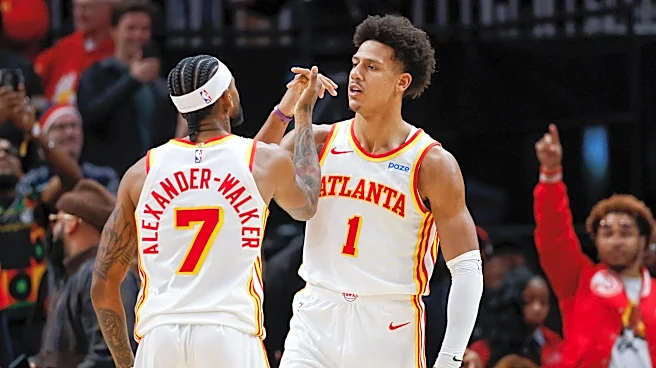
The Atlanta Hawks are currently 6-4 and have won three consecutive games, with a busy schedule of seven games in 11 days. Coach Snyder's continued emphasis on flexible rotations and trusting his players, regardless of individual game statistics, suggests that players like McCollum will continue to play significant roles, especially in late-game situations. The team's ability to adapt to injuries, such as Jalen Johnson's absence, and integrate different players into key roles will be crucial for their sustained success. This coaching approach could also influence how other teams manage their veteran players, potentially leading to a greater emphasis on overall impact rather than just immediate statistical output.
Beyond the Headlines
This scenario delves into the psychological aspects of coaching and player management in elite sports. Snyder's trust in McCollum, despite a poor shooting night, speaks to the importance of a coach's belief in their players' long-term value and mental fortitude. It also touches upon the concept of 'process over results' in sports, where the focus is on sound decision-making and strategic execution, even if the immediate outcome (like a missed shot) isn't ideal. This approach can build resilience within a team, teaching players to not get 'focused on ourselves' but rather to prioritize collective success. The dynamic between individual performance and team strategy is a constant challenge for coaches, and Snyder's handling of McCollum's situation offers a case study in balancing these elements effectively.