




What's Happening?
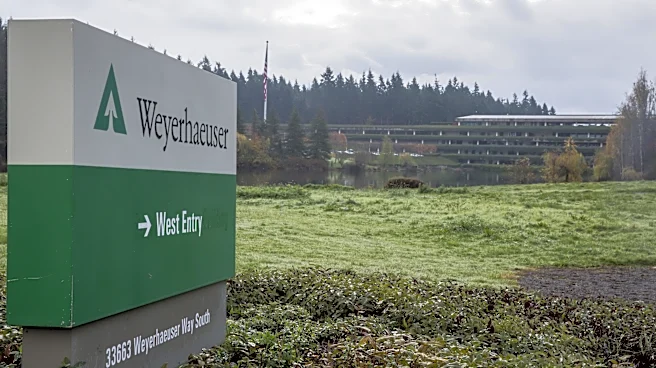
Weyerhaeuser Company has been identified as a funder for the GHG Protocol's upcoming Land Sector and Removals Standard and Guidance, slated for release in 2026. This initiative aims to establish comprehensive guidelines for measuring and reporting greenhouse
gas emissions and removals within the land sector. The GHG Protocol, a global standard-setter for greenhouse gas accounting, relies on contributions from various organizations to develop its publications. Weyerhaeuser, a major player in the forest products industry, joins a list of other significant funders for this specific standard, including the Bezos Earth Fund, Cargill, Caisse de depot et placement du Quebec (CDPQ), the Department of Foreign Affairs and Trade of Australia, Gordon and Betty Moore Foundation, IKEA, UPS Foundation, and Shell. This funding indicates Weyerhaeuser's involvement in shaping future environmental reporting frameworks relevant to its core business operations.
Why It's Important?
Weyerhaeuser's financial contribution to the GHG Protocol's Land Sector and Removals Standard is significant for several reasons. As a leading timber and forest products company, Weyerhaeuser's operations are directly impacted by standards related to land use and carbon sequestration. By funding the development of these guidelines, the company gains a voice in shaping the methodologies that will likely influence future regulatory requirements and industry best practices for carbon accounting in forestry and land management. This involvement can help ensure that the standards are practical and achievable for companies operating in the sector, potentially mitigating future compliance costs or operational disruptions. Furthermore, it signals Weyerhaeuser's commitment to sustainability and transparency in its environmental impact reporting, which can enhance its reputation among investors, consumers, and environmental stakeholders who increasingly prioritize corporate environmental responsibility.
What's Next?
The Land Sector and Removals Standard and Guidance is scheduled for publication in 2026. Following its release, companies involved in land management, agriculture, and forestry, including Weyerhaeuser, will likely begin to assess and potentially adopt these new guidelines for their greenhouse gas accounting and reporting. The standard's implementation could lead to revised corporate sustainability reports, new internal carbon management strategies, and potentially influence investment decisions in land-based carbon projects. Regulatory bodies may also look to these standards as a basis for developing future environmental policies and compliance requirements related to land use and carbon removals. Weyerhaeuser, having contributed to its development, will be well-positioned to adapt to and potentially benefit from the widespread adoption of these new protocols.
Beyond the Headlines
Weyerhaeuser's funding of the GHG Protocol's land sector standard highlights a broader trend of private sector engagement in the development of environmental accounting frameworks. This involvement can be seen as a strategic move for companies to influence the rules that will govern their environmental performance measurement, ensuring that these rules are both scientifically robust and practically implementable. It also underscores the increasing importance of carbon removals and land-based solutions in global climate change mitigation efforts. The development of standardized methodologies for these activities is crucial for creating credible carbon markets and for accurately tracking progress towards climate goals. Weyerhaeuser's participation reflects the growing recognition within industries that proactive engagement in standard-setting can lead to more effective and equitable environmental governance.