






What's Happening?
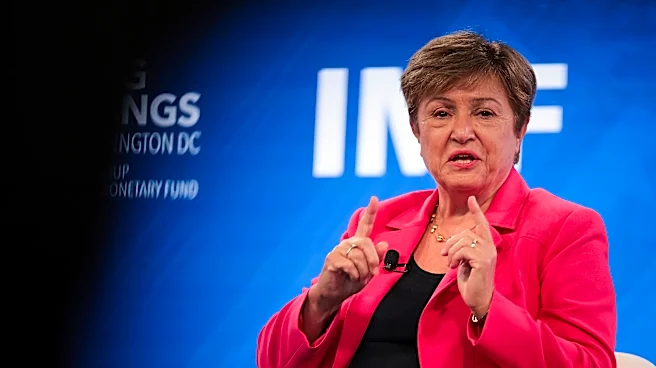
The International Monetary Fund (IMF) is advocating for comprehensive approaches that encompass the entire financial system to combat cross-border fraud. This call comes amidst rising scam losses globally, with a survey by the UAE Cybersecurity Council
indicating that 27% of respondents had lost money to scams, and only 9% fully recovered their losses. The Global Anti-Scam Alliance estimates consumer scam losses at $442 billion across 42 markets in its 2025 survey. Interpol has identified scam centers in at least 25 countries, with the Middle East emerging as a new area of activity. The IMF and the World Bank are concerned that repeated scams erode trust in digital payments and financial institutions, impacting financial inclusion, integrity, and stability. The IMF's recommendations emphasize the need for domestic and cross-border cooperation to address this growing issue.
Why It's Important?
The increasing prevalence of cross-border fraud poses significant threats to the U.S. financial system and its global interconnectedness. As scam proceeds often leave a country within minutes, national anti-scam utilities face challenges in tracing and freezing funds once they move abroad. This undermines the effectiveness of domestic efforts and highlights the urgent need for international collaboration. The erosion of trust in digital payments and financial institutions, as noted by the IMF, could deter consumers and businesses from utilizing digital financial services, potentially slowing economic growth and financial innovation. For U.S. financial institutions, the lack of real-time cross-border intelligence and enforcement mechanisms means increased exposure to fraud risks and potential financial losses, impacting their stability and operational costs. The U.S. stands to gain from improved international frameworks that facilitate faster information sharing and coordinated action against financial criminals.
What's Next?
The IMF's call for integrated financial system approaches suggests a future where national anti-scam capabilities are better connected across borders. This could involve the development of common standards for data sharing, real-time intelligence exchange between financial intelligence units, and mutual recognition of freezing orders. Countries like Malaysia, with its National Scam Response Centre, and Indonesia, with its Anti-Scam Centre, are already implementing national solutions, which could serve as models for broader international adoption. The Central Bank of the UAE is also establishing its Anti-Fraud Operations Center (CAFOC). The next steps will likely involve international bodies and national governments working to establish the 'four building blocks' for cross-border connectivity, as outlined in a related paper, to ensure that national utilities can effectively combat fraud that transcends national boundaries.
Beyond the Headlines
The deeper implications of the IMF's push for integrated anti-fraud measures extend beyond immediate financial losses. The integrity of the global financial system is at stake, as unchecked cross-border fraud can facilitate money laundering, terrorist financing, and other illicit activities, posing national security risks. The ethical dimension involves protecting vulnerable populations who are often targets of scams, ensuring that financial inclusion initiatives are not undermined by fear of fraud. Legally, harmonizing privacy regimes and legal mandates for data sharing across different jurisdictions will be a complex but crucial undertaking. Culturally, there's a need to foster greater public awareness and education about scam tactics to empower individuals and businesses to protect themselves. Ultimately, the success of these initiatives will depend on a sustained commitment to international cooperation and technological innovation to outpace sophisticated criminal networks.