






What's Happening?
ExxonMobil is navigating a period of softer crude prices, influenced by government reserve releases and ongoing geopolitical stalemates between the United States and Iran. Despite this, the company has achieved significant operational milestones. The
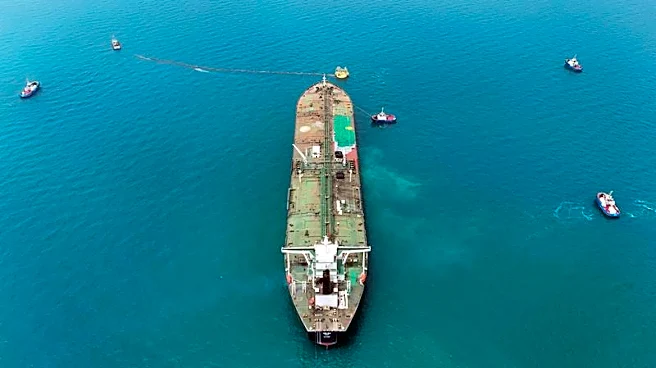
Stabroek block offshore Guyana, operated by ExxonMobil and its co-venturers, has produced its one billionth barrel of oil in under seven years, a rapid pace for deepwater development. Concurrently, ExxonMobil has commenced carbon capture, transport, and storage operations for steelmaker Nucor's direct reduced iron facility in Convent, Louisiana. This project supports lower-carbon steel production and serves as a commercial example of ExxonMobil's expanding carbon capture and storage business. These developments highlight ExxonMobil's diversified footprint and long-cycle project pipeline, which aim to provide stability amidst fluctuating crude markets. The company's integrated model, encompassing upstream production, refining, and chemicals, is designed to smooth financial results, with refining and chemical margins often offsetting upstream softness.
Why It's Important?
These developments are important for several reasons. The rapid production milestone in Guyana underscores the efficiency and scale of ExxonMobil's deepwater operations, providing a significant source of low-cost, high-quality crude with comparatively light carbon intensity. This supports the company's efforts to increase output while managing emissions, a critical balance in the current energy landscape. The carbon capture project in Louisiana demonstrates a tangible step towards decarbonization for industrial emitters, offering a model where specialists like ExxonMobil can provide solutions for hard-to-abate emissions. This expands ExxonMobil's strategic toolkit and positions it as a key player in lower-carbon services, which could become a differentiator among large producers as industrial customers seek decarbonization pathways. For the U.S. energy sector, these initiatives showcase how integrated energy companies are adapting to market volatility and environmental pressures, maintaining steady cash generation and disciplined capital spending while exploring new revenue streams in the energy transition.
What's Next?
Looking ahead, the energy market will continue to monitor several factors that could influence ExxonMobil and its peers. The next round of quarterly results will be closely scrutinized for commentary on production, costs, and distributions, especially if crude prices remain soft. Government decisions regarding strategic petroleum reserves and any progress in diplomatic discussions between Washington and Tehran will also significantly impact market sentiment and crude flows. Seasonally, the shift into colder months will bring new dynamics for refining margins, driving demand patterns, and inventory builds, particularly for gas and heating fuels. ExxonMobil will likely continue to emphasize capital discipline, low-cost resource development, and consistent distributions, leveraging its integrated model and balance sheet strength to navigate market fluctuations. The company's ongoing efforts in Guyana and the expansion of its carbon capture business will be key areas to watch for sustained growth and diversification.
Beyond the Headlines
Beyond the immediate financial and operational aspects, ExxonMobil's actions reflect broader shifts in the energy industry. The success in Guyana highlights the increasing importance of technologically advanced, large-scale offshore developments in securing global energy supply, even as the world transitions towards lower-carbon alternatives. The carbon capture project in Louisiana signifies a growing trend where traditional energy companies are leveraging their existing infrastructure and expertise to provide environmental solutions. This move could reshape the competitive landscape, as companies with early operational track records in carbon capture may gain a significant advantage. Furthermore, the emphasis on low-carbon intensity barrels from Guyana and the development of carbon capture services illustrate the complex balancing act energy majors face: meeting global energy demand while addressing climate concerns. This dual focus suggests a long-term strategy that integrates conventional energy production with emerging environmental technologies, potentially influencing future regulatory frameworks and investment patterns in the U.S. and globally.