







What's Happening?
Threemile Canyon Farms, located in Boardman, Oregon, has been awarded the 2026 Oregon Visionary Award by Oregon Business & Industry (OBI). This recognition highlights the farm's dedication to sustainable agriculture practices, land stewardship, high animal
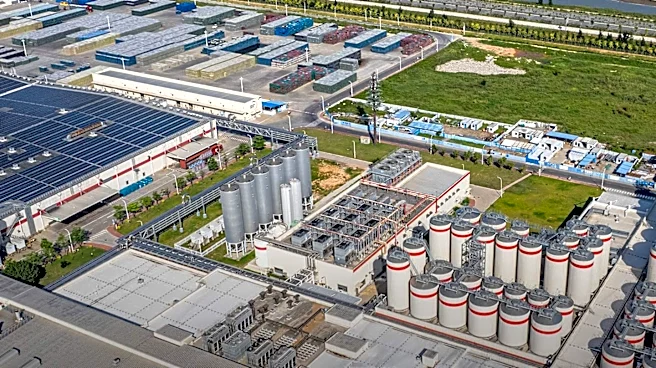
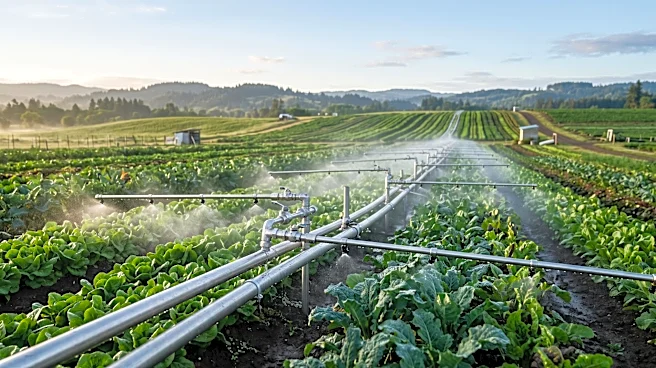
welfare standards, and significant community contributions. Established in 1999, Threemile Canyon Farms operates a unique closed-loop system that integrates crop farming and dairy operations. A key component of this system is a large-scale dairy whose manure is processed on-site into renewable natural gas, nutrient-rich organic fertilizer for crops, and bedding for cows. This innovative approach allows the farm to maintain a zero-discharge permit, preventing animal waste from entering local water sources. The farm also utilizes a state-of-the-art irrigation system for its 39,000 acres of irrigated farmland, which supplies much of the feed for its dairy herd and produces millions of pounds of food annually, including potatoes, corn, carrots, and organic crops like onions and blueberries. With approximately 400 employees, Threemile Canyon Farms plays a vital role in the regional economy and food supply.
Why It's Important?
This award underscores the growing importance of sustainable practices within the U.S. agricultural sector. Threemile Canyon Farms serves as a model for how large-scale farming operations can integrate environmental responsibility with economic viability. Their closed-loop system demonstrates a practical solution to waste management and resource utilization, which can inspire other agricultural businesses to adopt similar eco-friendly methods. The farm's commitment to producing renewable natural gas and organic fertilizers contributes to reducing greenhouse gas emissions and reliance on synthetic chemicals, aligning with broader national goals for environmental protection and energy independence. Furthermore, their active involvement in community programs like 4-H and FFA, along with significant food donations to Farmers Ending Hunger, highlights the social responsibility aspect of modern agriculture, fostering community well-being and addressing food insecurity. This recognition by OBI also signals to consumers and stakeholders that sustainable and ethical farming practices are increasingly valued and rewarded.
What's Next?
The recognition from OBI is likely to further elevate Threemile Canyon Farms' profile as a leader in sustainable agriculture, potentially attracting more attention from industry peers, policymakers, and consumers interested in environmentally responsible food production. The farm may see increased opportunities for partnerships, research collaborations, and sharing its best practices with other agricultural entities looking to transition to more sustainable models. This award could also encourage other businesses within Oregon and across the U.S. to pursue similar visionary approaches in their respective industries, driven by the potential for both environmental benefits and public recognition. Continued innovation in their closed-loop system, such as further advancements in renewable energy generation or nutrient recovery, could be anticipated as the farm strives to maintain its leadership position. The farm's ongoing community engagement and philanthropic efforts are also expected to continue, reinforcing its role as a responsible corporate citizen.
Beyond the Headlines
The success of Threemile Canyon Farms in achieving such a prestigious award reflects a broader societal shift towards valuing sustainability and ethical practices in food production. This development highlights the evolving consumer demand for transparency and environmental consciousness from agricultural businesses. Beyond the immediate recognition, this model challenges conventional farming paradigms by demonstrating that large-scale operations can be both highly productive and environmentally benign. It also brings to light the potential for agriculture to contribute significantly to renewable energy portfolios through on-site waste conversion. The farm's integrated approach to animal welfare, land stewardship, and community support sets a high bar for corporate social responsibility in the agricultural industry, suggesting a future where such holistic practices become the norm rather than the exception. This could lead to long-term changes in agricultural policy, investment priorities, and consumer purchasing habits, favoring businesses that prioritize ecological health and community well-being.