









What's Happening?
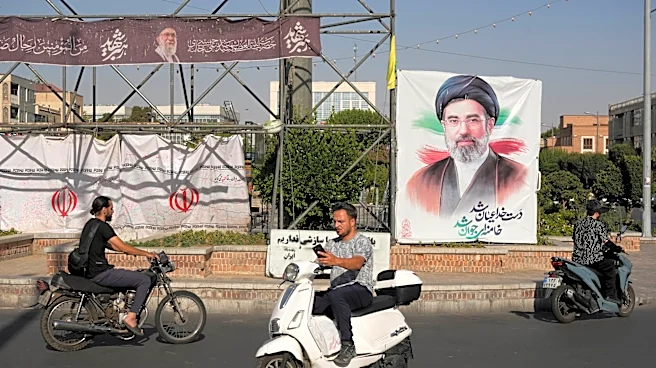
Oil prices have decreased by more than 1% to their lowest levels since March, following positive developments in U.S.-Iran talks. President Trump announced that discussions in Qatar had been successful, which has alleviated concerns about oil supply disruptions.
Brent crude futures fell by $1.38, or 1.89%, to $71.57 a barrel, while U.S. West Texas Intermediate crude dropped by 92 cents, or 1.32%, to $68.58 a barrel. The negotiations aim to ensure the flow of shipping through the Strait of Hormuz and establish a lasting ceasefire. The U.S. and Iran have been engaged in technical talks in Doha, with tanker traffic through the strait beginning to recover. U.S. Vice President JD Vance confirmed that oil flows have returned to pre-war levels.
Why It's Important?
The decline in oil prices is significant as it reflects a potential easing of geopolitical tensions that have previously threatened global oil supply. The successful talks between the U.S. and Iran could lead to increased oil production and stability in the oil markets. This development is crucial for industries reliant on oil, as lower prices can reduce operational costs and potentially lead to lower consumer prices. Additionally, the return of tanker traffic through the Strait of Hormuz, a critical chokepoint for global oil shipments, suggests a stabilization of supply routes, which is vital for maintaining consistent oil flow to international markets.
What's Next?
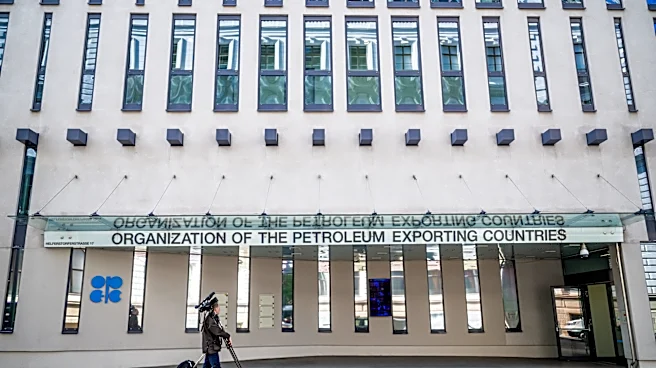
As the U.S. and Iran continue their discussions, further agreements could lead to a more stable oil market. OPEC+ countries are expected to meet soon to discuss potential increases in output targets, which could further influence oil prices. The outcome of these talks and subsequent decisions by oil-producing nations will be closely monitored by market analysts and stakeholders. Any significant changes in production levels or geopolitical developments could impact future oil prices and market stability.