



What's Happening?
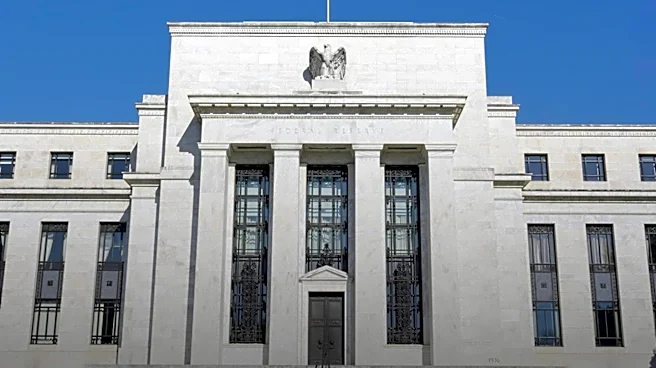
U.S. Treasury yields experienced an increase on Thursday as investors analyzed the minutes from the Federal Reserve's October meeting. The benchmark 10-year Treasury note yield, along with the yields on the 30-year Treasury bond and 2-year Treasury note,
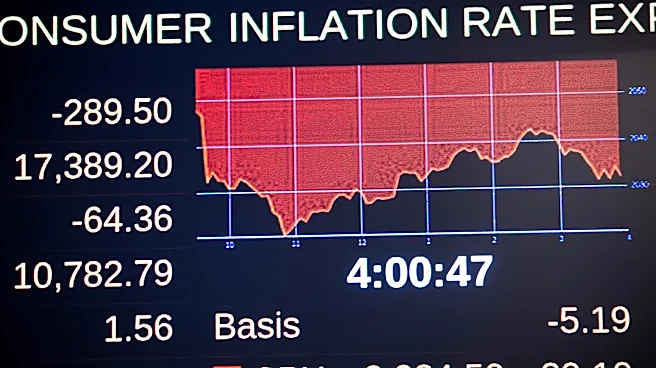
each rose by more than 3 basis points. Specifically, the 10-year yield reached 5.103%, the 30-year yield hit 5.444%, and the 2-year yield stood at 4.839%. These movements occurred as policymakers indicated confidence in potentially raising interest rates in December, though they are awaiting further data. A significant point of discussion in the Federal Open Market Committee (FOMC) meeting was the potential for artificial intelligence (AI) to be a 'material source of inflation risk.' Fed Governor Christopher Waller also expressed strong concerns about inflation, suggesting a half-percentage-point rate hike might be necessary at the upcoming December 8 and 9 meeting, and even hinted at reversing previous rate reductions to 'shock people' into addressing inflation.
Why It's Important?
The rise in U.S. Treasury yields signals investor reactions to the Federal Reserve's hawkish stance and ongoing inflation concerns. Higher Treasury yields can increase borrowing costs for the U.S. government, businesses, and consumers, potentially impacting economic growth. For businesses, this could mean more expensive loans for expansion and operations, while consumers might face higher interest rates on mortgages, car loans, and credit cards. The Fed's focus on AI as a potential inflation driver introduces a new dimension to monetary policy considerations, suggesting that technological advancements, while often seen as deflationary, could also contribute to price pressures. This perspective could influence future regulatory approaches to technology and its economic impact. The market's current pricing of a 95% chance of a quarter-percentage-point rate hike reflects a strong expectation of continued monetary tightening, which could affect equity markets and investment strategies.
What's Next?
Investors are now looking ahead to key economic data releases that could further influence Treasury yields and Federal Reserve policy decisions. The upcoming weekly initial jobless claims data, scheduled for Thursday, and Friday's preliminary Michigan consumer sentiment report will provide additional insights into the health of the U.S. economy and consumer behavior. These reports will be crucial for the Federal Reserve as it gathers more information before its December meeting. Should the data indicate persistent inflation or a robust labor market, the likelihood of further interest rate hikes, potentially even a half-percentage-point increase as suggested by Governor Waller, could increase. Conversely, weaker economic data might temper expectations for aggressive tightening. Traders will continue to monitor Fed communications and economic indicators closely to adjust their expectations for future rate decisions and their impact on bond markets.
Beyond the Headlines
The Federal Reserve's explicit mention of AI as a 'material source of inflation risk' in its October meeting minutes represents a notable shift in how central banks are assessing technological advancements. Traditionally, technology has often been viewed as a deflationary force, increasing productivity and lowering costs. However, the Fed's concern suggests a recognition of potential inflationary pressures arising from AI, perhaps due to increased demand for specialized labor, energy consumption, or the concentration of market power among AI-driven companies. This perspective could lead to broader discussions about the economic implications of advanced technologies and how they integrate into macroeconomic models. It also highlights the evolving challenges faced by policymakers in understanding and managing inflation in an increasingly technology-driven economy, potentially prompting new research and policy frameworks to address these complex interactions.