




What's Happening?
Stanley Druckenmiller, head of Duquesne Family Office, has stated there is at least a 70% probability of data centers operating in space within the next ten years. This prediction was made during the TomorrowX Summit in Austin, where Druckenmiller discussed
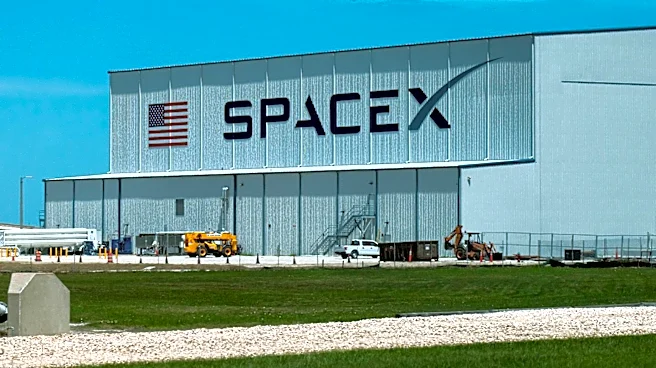
future technological advancements. Concurrently, his Duquesne Family Office disclosed a new position in Space Exploration Technologies Corp. (SpaceX), acquiring 202,125 shares valued at approximately $30.49 million as of September 30. This investment was revealed in Duquesne's third-quarter 13F filing. Druckenmiller also forecasted significant progress in cancer treatment, suggesting that advances in genetics, immunotherapy, and artificial intelligence could transform cancer into a 'managed disease' within the same timeframe. Despite these optimistic long-term predictions, Druckenmiller noted a cautious short-term investment strategy for Duquesne, focusing on 'capital preservation' due to current market uncertainty.
Why It's Important?
Druckenmiller's prediction regarding space-based data centers highlights a potential paradigm shift in data infrastructure, with significant implications for U.S. technology and aerospace industries. The move to space could offer advantages such as enhanced security, reduced latency for certain applications, and access to unique environmental conditions for computing. This could spur innovation and investment in satellite technology, advanced materials, and space logistics, creating new economic opportunities and jobs. His firm's substantial investment in SpaceX, a leading U.S. private space company, underscores the growing confidence among major financial players in the commercial space sector's future. Furthermore, Druckenmiller's optimistic outlook on cancer treatment, driven by U.S.-led advancements in genetics, immunotherapy, and AI, signals potential breakthroughs that could revolutionize healthcare, extend lifespans, and reduce the economic burden of cancer, benefiting pharmaceutical companies, biotech firms, and the broader healthcare system.
What's Next?
The coming decade will likely see increased research and development into the feasibility and deployment of space-based data centers, potentially driven by companies like SpaceX. This could involve further private and public sector investments in space infrastructure, including launch capabilities, satellite technology, and orbital maintenance. Regulatory frameworks for operating data centers in space will also need to evolve, presenting new challenges and opportunities for policymakers. In the healthcare sector, continued advancements in genetics, immunotherapy, and artificial intelligence are expected to accelerate, leading to new diagnostic tools and therapeutic options for cancer patients. This will likely involve ongoing clinical trials, increased collaboration between tech and pharmaceutical companies, and potential shifts in healthcare policy to accommodate these innovative treatments. Druckenmiller's cautious investment stance suggests that while long-term technological trends are promising, market volatility may persist, influencing investment decisions in the near future.
Beyond the Headlines
The concept of data centers in space raises profound questions about data sovereignty, international law, and the environmental impact of increased orbital activity. Establishing such infrastructure could lead to new geopolitical considerations, as nations vie for control or access to these extraterrestrial computing resources. Ethical debates surrounding data privacy and security in a space-based environment will also become more prominent. On the medical front, the potential to transform cancer into a 'managed disease' could fundamentally alter societal perceptions of illness and mortality, leading to significant ethical discussions about access to advanced treatments, the definition of health, and the allocation of healthcare resources. These developments underscore a future where technological innovation in space and medicine will not only drive economic growth but also reshape legal, ethical, and societal norms.