




What's Happening?
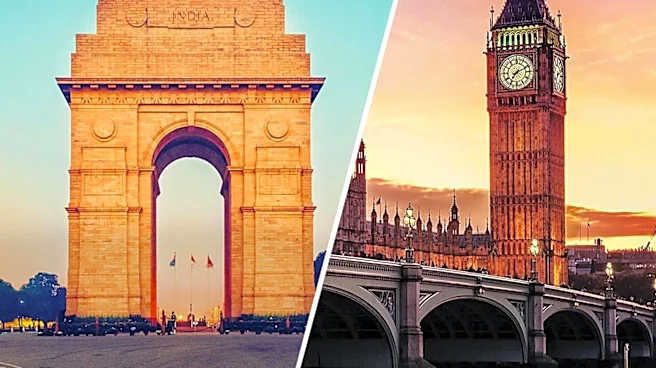
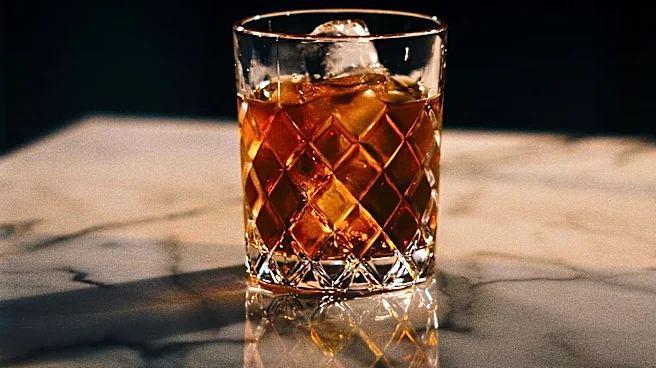
The India-U.K. trade deal, recently enacted, is encountering an early obstacle concerning import tariffs on bulk Scotch whisky. Despite expectations that duties on bulk Scotch whisky imports would decrease to 75% and then gradually to 40% over a decade,
India now reportedly plans to impose a 162.5% duty. This proposed rate is higher than the 150% duty that was in place before the trade agreement. Indian authorities are classifying bulk Scotch as a raw material, specifically as 'compound alcoholic preparations,' arguing that the preferential tariffs outlined in the deal apply only to imported bottled Scotch. This classification dispute has led to thousands of liters of bulk Scotch from companies like Pernod, Diageo, and Bacardi being held at Indian ports. The U.K. government is actively engaging with the Indian government to resolve the issue and ensure that U.K. businesses can export under the agreed-upon tariffs.
Why It's Important?
This dispute is significant because India represents the world's largest whisky market by volume, making favorable tax treatment for Scotch imports a key objective for the U.K. in the trade deal. The current impasse threatens to undermine a major benefit anticipated by the U.K. from the agreement. For British producers, bulk Scotch exports offer an opportunity to establish long-term relationships with Indian companies and deepen their involvement in India's domestic alcoholic beverage industry. If the higher tariffs are maintained, it could significantly impact the profitability and market access for U.K. distillers in India, potentially limiting the expected boost in bilateral trade. The outcome of these negotiations will also set a precedent for how other product classifications and tariff disputes might be handled under the broader trade agreement, affecting future trade relations between the two nations.
What's Next?
U.K. ministers are in urgent discussions with the Government of India to resolve the tariff dispute on bulk Scotch whisky. The immediate goal is to ensure that U.K. businesses can export under the preferential tariffs agreed upon in the trade deal. The resolution will likely involve further negotiations between trade officials from both countries to clarify the classification of bulk Scotch whisky and its eligibility for reduced duties. The companies affected, including Pernod, Diageo, and Bacardi, will be closely monitoring these developments as their shipments remain stalled at Indian ports. The outcome will determine whether the trade deal can deliver its intended economic benefits for the Scotch whisky industry and could influence future trade policy discussions between India and the U.K.
Beyond the Headlines
The disagreement over Scotch whisky tariffs highlights the complexities inherent in international trade agreements, particularly concerning product classification and interpretation of terms. While the trade deal aims to boost bilateral trade by £25.5 billion ($34 billion) annually by 2040, this specific dispute reveals how technical interpretations can create significant barriers. The Indian stance, classifying bulk Scotch as a raw material rather than a finished product eligible for preferential rates, underscores a protectionist approach to support its domestic blending industry. This situation could prompt other countries to scrutinize product definitions more closely in future trade negotiations to prevent similar ambiguities. It also raises questions about the enforceability and clarity of trade agreements when specific product categories are subject to differing interpretations by signatory nations.