



What's Happening?
As AI company Anthropic prepares for its initial public offering (IPO) on Thursday, November 19, under the ticker ANT, business leaders are weighing in on its significance. Kevin O'Leary, chairman of O'Leary Ventures and host of "Shark Tank," has drawn
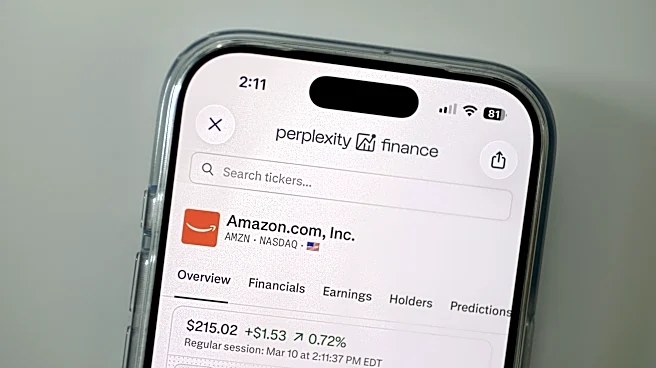
a parallel between investing in Anthropic's IPO and Amazon's IPO. O'Leary stated on Sozzi Unleashed that there is "no difference" between the two, highlighting Amazon's initial volatility and lack of profitability but ultimate success in building a massive platform. Anthropic is expected to sell 825 million shares priced between $70 and $78 each, which would value the company between $1.3 trillion and $1.45 trillion, positioning it as one of the largest IPOs ever, close to SpaceX's $1.77 trillion valuation. Despite Anthropic's operating losses of $1.3 billion for the first nine months of the year and plans to spend nearly $900 billion on computing and data centers, O'Leary views profitability as a secondary concern, emphasizing the long-term bet on AI's transformative role across all economic sectors.
Why It's Important?
Kevin O'Leary's comparison of Anthropic's IPO to Amazon's early days underscores the high-stakes nature and speculative potential surrounding major AI companies. This perspective suggests that investors are being asked to look beyond immediate profitability and instead bet on the long-term, transformative impact of artificial intelligence across the entire U.S. economy. The sheer scale of Anthropic's projected valuation, potentially reaching $1.45 trillion, indicates the immense investor confidence and hype surrounding the AI sector. Such a large IPO could significantly influence market sentiment towards other AI ventures and technology stocks. For the U.S. economy, a successful Anthropic IPO could signal a new wave of investment and innovation in AI, potentially driving productivity gains and economic growth across various industries, as O'Leary suggests. However, the substantial operating losses and massive planned expenditures also highlight the significant financial risks involved in pioneering advanced AI technologies.
What's Next?
Anthropic is set to begin trading on Thursday, November 19, under the ticker ANT, with the final offer price expected to be set on the evening of November 18. The market's reaction to Anthropic's debut will be closely watched as a bellwether for investor appetite in the AI sector. If the IPO performs strongly, it could encourage more investment into AI research and development, potentially accelerating technological advancements and adoption across industries. Conversely, any significant volatility or underperformance could temper investor enthusiasm. The company's ability to manage its substantial planned expenditures on computing and data centers while eventually moving towards profitability will be a key factor for its long-term success. Investors will be looking for signs of how Anthropic plans to monetize its AI platforms and achieve the widespread economic impact that proponents like O'Leary envision.
Beyond the Headlines
The comparison to Amazon's early IPO days evokes a narrative of disruptive innovation and long-term value creation, suggesting that Anthropic could become a foundational technology company of the future. This perspective encourages a 'buy and hold' strategy, emphasizing patience over immediate returns. However, it also highlights the inherent risks of investing in nascent, high-growth sectors where profitability is years away and capital expenditure is enormous. The sheer scale of investment required for AI infrastructure, as evidenced by Anthropic's nearly $900 billion plan, points to a future where only well-capitalized entities can compete at the forefront of AI development. This could lead to further concentration of power and innovation within a few dominant players, raising questions about market competition and accessibility for smaller innovators. The IPO also serves as a litmus test for how the public market values potential future impact versus current financial performance in the rapidly evolving AI landscape.