








What's Happening?
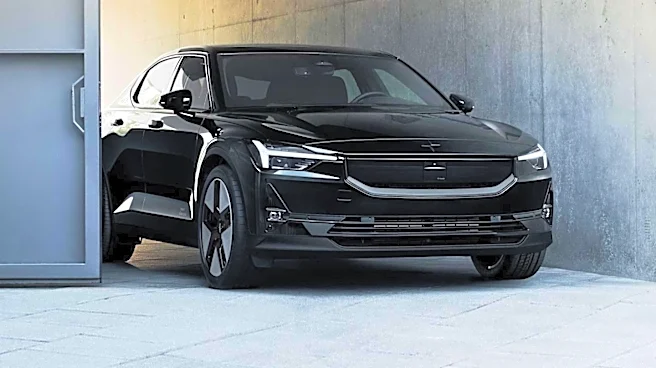
The U.S. Commerce Department has decided not to authorize the import of new Polestar vehicles from the model year 2027 onwards. This decision is part of a broader rule that bans connected cars from automakers with Chinese affiliations. Polestar, an electric
vehicle brand spun out from Volvo Cars and owned by the Chinese company Zhejiang Geely Holding, will continue to sell its existing stock of Polestar 3 and Polestar 4 SUVs in the U.S. and maintain customer support through its service network. However, future models like the Polestar 5 sedan and Polestar 6 roadster will not be available in the U.S. market. Despite this setback, Polestar's CEO, Michael Lohscheller, emphasized the company's focus on growth in Europe and other international markets.
Why It's Important?
This decision by the U.S. Commerce Department highlights the ongoing tension between the U.S. and China regarding trade and technology. The ban on Polestar imports is a significant move in the context of protecting domestic auto manufacturing interests and reducing reliance on Chinese-linked companies. This could impact the U.S. electric vehicle market by limiting consumer choices and potentially affecting prices. For Polestar, the inability to sell new models in the U.S. could hinder its growth prospects in one of the world's largest automotive markets. The decision also underscores the increasing importance of regional dynamics in the global automotive industry, as companies like Polestar shift their focus to markets with fewer regulatory barriers.
What's Next?
Polestar plans to continue its expansion in Europe, where it sees significant growth potential. The company is also targeting markets in Southeast Asia, Eastern Europe, Latin America, and Canada. In the U.S., the focus will likely shift to supporting existing customers and maintaining service networks for current models. The broader implications of this decision may lead to further scrutiny of other automakers with Chinese ties, potentially affecting their operations in the U.S. market. Additionally, this move could prompt other countries to adopt similar protectionist measures, influencing global trade policies and automotive industry strategies.