
What's Happening?
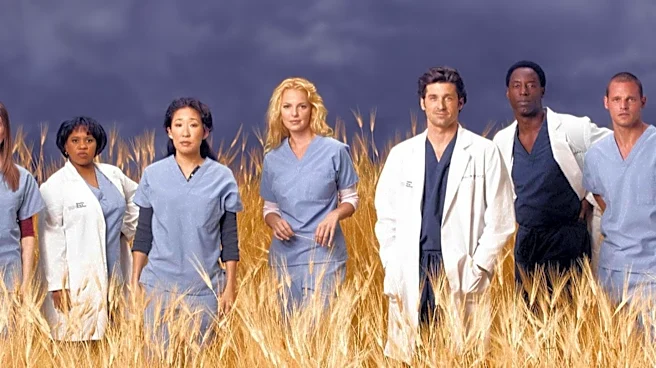
The new 'Grey's Anatomy' spinoff, a Texas-based medical drama, has been delayed and will now aim for a fall 2027 debut instead of its previously planned 2027 midseason lineup. Additionally, the production
of the show is moving from California to Albuquerque, New Mexico. This relocation was prompted by the production's failure to qualify for California's film and television tax incentive system. Betsy Beers, Shonda Rhimes' longtime producing partner, expressed frustration during an Assembly Committee meeting in North Hollywood, stating that the initial application for tax credits was denied because the show did not provide enough jobs for California to consider it an 'asset.' Beers highlighted Shondaland's extensive history in California and the assumption that the new spinoff would qualify due to this loyalty, an assumption that proved incorrect.
Why It's Important?
The decision to move the 'Grey's Anatomy' spinoff production out of California underscores the significant role that state tax incentives play in the entertainment industry's location decisions. Even for established production companies like Shondaland, with a long history and successful franchises, the financial benefits offered by other states can be a decisive factor. This move impacts California's economy by diverting potential job creation and spending to New Mexico, affecting various sectors from crew employment to local businesses. The delay in the show's premiere also highlights the administrative complexities and uncertainties that production companies face when navigating incentive programs, which can lead to increased costs and altered timelines. The situation reflects a broader trend of states actively competing for film and television productions, challenging California's traditional dominance.
What's Next?
The relocation to New Mexico means that the production will benefit from the incentives and infrastructure offered by that state, which has actively developed its film and television industry. For California, this event may further fuel discussions and efforts to refine its tax incentive programs to better retain productions. The proposed expansion of California's Film and Television Tax Credit Program, including increased funding and extended eligibility, is a direct response to such competitive pressures. However, the 'Grey's Anatomy' spinoff's experience suggests that even with a larger program, the criteria for qualification and the overall predictability of the incentive process remain critical factors for production companies planning future projects. The success of New Mexico in attracting this high-profile production could encourage other states to further enhance their own incentive offerings.
Beyond the Headlines
The move of the 'Grey's Anatomy' spinoff reveals a deeper narrative about the evolving landscape of the entertainment industry. It illustrates that while creative talent and established brands are crucial, the economic realities of production, particularly the availability of tax credits, can dictate where stories are brought to life. The frustration voiced by Betsy Beers, emphasizing the loss of personnel, time, and money, highlights the human and financial toll of navigating complex incentive systems. This situation also brings to light the challenge for states to balance public investment in incentives with tangible economic returns, and how to value the long-term contributions of established companies versus new job creation metrics. The shift in production location for a major franchise like 'Grey's Anatomy' could signal a more decentralized future for Hollywood, where production hubs are increasingly distributed across the country based on competitive financial environments.