





What's Happening?
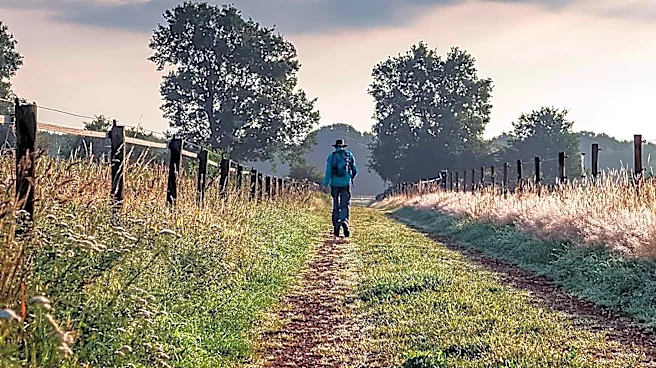
Nature presenter Kate Humble emphasizes the critical role of daily walking in her fitness and mental well-being routine. She considers walking as vital as breathing and begins her day with an hour-long walk in the Welsh countryside, without her phone
or distractions. Humble highlights that even short walks, such as 20 minutes during lunchtime, can be significantly beneficial. She integrates walking into various aspects of her life, including work meetings, commuting, and socializing. Humble suggests walking meetings as a productive alternative to sitting in an office, citing figures like Steve Jobs and Bill Gates who adopted this practice. She also uses walking as a method for problem-solving and to achieve mental clarity, describing it as a way to organize thoughts and reduce stress. For her, walking provides a crucial 'doing nothing' time that allows for reflection and decompression.
Why It's Important?
Kate Humble's advocacy for walking underscores a growing recognition of accessible and low-impact physical activity for overall health. In a society increasingly prone to sedentary lifestyles, her approach highlights that effective fitness does not always require strenuous gym workouts or specialized equipment. This perspective is particularly relevant for individuals seeking sustainable and enjoyable ways to incorporate physical activity into their daily lives. The emphasis on walking for mental well-being addresses the rising concerns about stress and mental health, offering a simple yet powerful coping mechanism. By integrating walking into work and social routines, Humble demonstrates how physical activity can be seamlessly woven into modern life, promoting a holistic approach to health that benefits both body and mind. This can inspire public health initiatives to encourage more walking, potentially reducing healthcare burdens associated with inactivity and stress-related conditions.
What's Next?
As awareness of the benefits of walking grows, there may be an increased adoption of walking-centric fitness routines and a greater demand for walkable urban environments. Public health campaigns could further promote walking as a primary form of exercise, encouraging individuals to integrate it into their daily commutes and work schedules. The concept of 'walking meetings' might gain more traction in corporate settings, leading to healthier workplace cultures. Furthermore, the market for walking-related accessories, such as comfortable footwear and fitness trackers, could see continued growth. There might also be a rise in community walking groups and organized walking events, fostering social connections and collective well-being. The focus on walking as a mental health tool could also lead to its inclusion in wellness programs and therapeutic recommendations, emphasizing its role beyond just physical fitness.
Beyond the Headlines
Kate Humble's perspective on walking touches upon deeper societal implications regarding our relationship with nature and technology. Her practice of walking without a phone highlights a conscious effort to disconnect from digital distractions and reconnect with the natural environment. In an era dominated by screens and constant connectivity, this approach advocates for mindfulness and presence, which are often lost in the digital age. The idea of walking as a means of problem-solving and creative thinking also suggests a return to more organic methods of cognitive processing, contrasting with the reliance on digital tools for intellectual tasks. This could signify a cultural shift towards valuing slower, more contemplative activities as essential for mental clarity and innovation. Ultimately, Humble's message encourages a re-evaluation of what constitutes 'productivity' and 'well-being,' suggesting that simple, natural acts can be profoundly impactful in a complex, fast-paced world.