








What's Happening?
In Suginami, a residential district west of central Tokyo, daily life revolves around a deeply ingrained food culture emphasizing seasonality, local sourcing, and community trust. Residents prioritize fresh, in-season produce from neighborhood greengrocers,
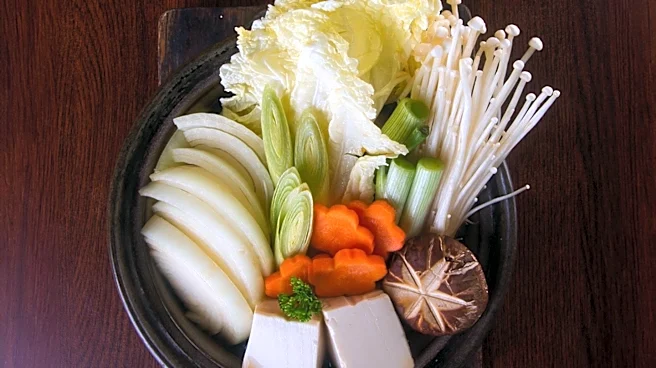
local markets, and family-run shops. This approach to food is not merely a tradition but a practical tool that lowers costs, enhances flavor, and reduces waste. Shopping is a daily or near-daily activity, allowing menus to adapt to what is freshest and best available. The district's food landscape is characterized by a network of small, independent shops alongside supermarkets, where tradition and convenience coexist. Japanese home cooking in Suginami is structured around rice, served with dashi broth and small side dishes, utilizing staples like seaweed, dried mushrooms, soy sauce, mirin, and rice vinegar, often sold in small formats suitable for compact kitchens. This local food system fosters a strong connection between buyers and sellers, where recommendations from shopkeepers often guide meal planning more than recipes.
Why It's Important?
Suginami's food culture highlights a sustainable and community-centric approach to consumption that offers valuable lessons for urban areas globally. By prioritizing seasonal and local ingredients, the district reduces its ecological footprint through decreased transportation and waste. This model also strengthens local economies by supporting small businesses and fostering direct relationships between producers and consumers. The emphasis on daily shopping and adapting meals to available produce promotes mindful consumption and reduces food waste, a significant environmental concern. Furthermore, this system preserves culinary heritage and local identity, as food choices reflect the unique rhythms and offerings of the neighborhood. For visitors, it provides an authentic insight into Japanese daily life beyond tourist attractions, showcasing how everyday routines contribute to a rich cultural tapestry and a more sustainable lifestyle.
What's Next?
The continued evolution of Suginami's food culture will likely see ongoing adaptation to modern lifestyles while striving to maintain its core values of seasonality and localism. As urban environments change, the balance between traditional family shops and larger supermarkets will remain a key dynamic. There may be increased interest in how these local food systems can be supported and replicated in other urban settings facing similar challenges of food security, sustainability, and community building. Educational initiatives, particularly those focused on food education in schools, will continue to play a crucial role in instilling these values in younger generations. The district may also see further integration of technology to enhance local food networks, such as online platforms connecting consumers with local producers, while still preserving the personal touch of neighborhood shops. The resilience of these small businesses against economic pressures will be a continuous factor in shaping the future of Suginami's food landscape.
Beyond the Headlines
The food culture in Suginami reflects deeper societal values beyond mere sustenance. It embodies a philosophy of respect for ingredients, nature, and community. The daily ritual of shopping and cooking fosters a sense of connection and belonging, where food acts as a social contract between sellers and buyers. This approach contrasts sharply with the often anonymous and mass-produced food systems prevalent in many parts of the world. Ethically, it promotes responsible consumption and a reduced environmental impact, aligning with broader global sustainability goals. Culturally, it reinforces the importance of heritage and tradition in a rapidly modernizing world, demonstrating how everyday practices can preserve unique local identities. The small, compact kitchens and portion sizes also highlight a practical efficiency and a conscious effort to minimize waste, reflecting a broader Japanese aesthetic of thoughtful utilization and appreciation for resources. This micro-level food system offers a compelling alternative model for urban living, emphasizing quality of life and community well-being over sheer convenience.