





What's Happening?
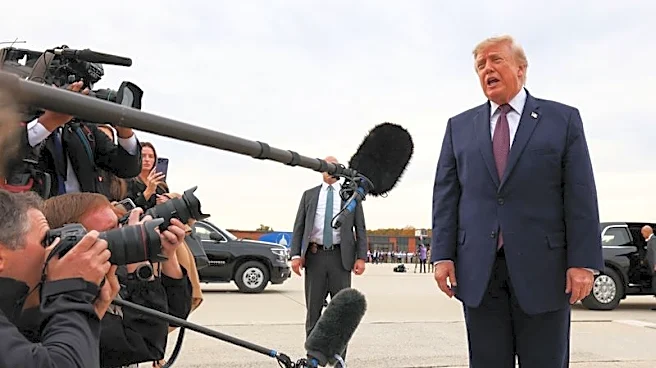
Congressman Michael Cloud (TX-27) has announced that the Port of Corpus Christi Authority has been awarded a federal grant of $7,153,376 through the U.S. Department of Transportation’s Port Infrastructure Development Program (PIDP). This significant funding
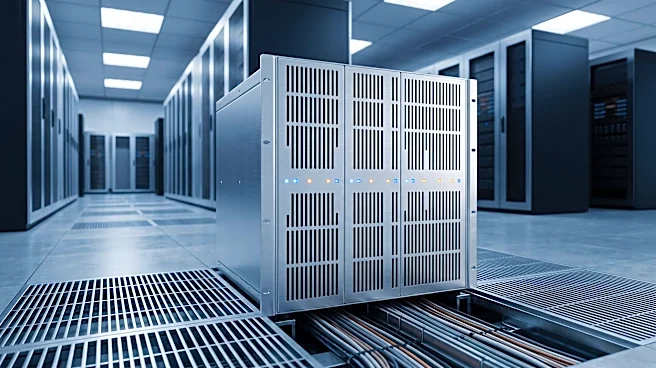
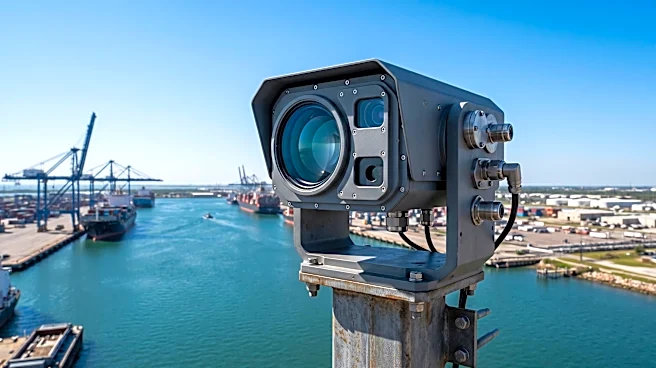
is earmarked for enhancing the port's infrastructure security and operational efficiency. The project will introduce advanced technological tools, including a computer model for real-time monitoring of port operations, underwater and laser mapping tools for channels and infrastructure, AI-enabled high-definition cameras and sensors, and tracking devices for vessels and mobile assets. These integrated systems aim to improve problem detection, emergency response times, and the efficient movement of ships, trains, and trucks within the port. Congressman Cloud emphasized the Port of Corpus Christi's central role in American energy security and its contribution to global markets.
Why It's Important?
This federal grant is crucial for bolstering the Port of Corpus Christi's capabilities, which is a vital hub for U.S. crude oil exports and handles over 200 million tons of cargo annually. The enhanced infrastructure security and operational efficiency will have a direct positive impact on the U.S. economy by ensuring the smooth flow of energy and goods to markets worldwide. Improved security measures will mitigate risks, while increased efficiency will reduce operational costs and transit times, benefiting businesses involved in trade and logistics. The project also supports the rapid deployment of the U.S. military, highlighting its strategic national importance. For the region, the port's continued growth and security contribute to job creation and economic stability, making this investment a significant boost for both local and national stakeholders.
What's Next?
The implementation of the new technological tools at the Port of Corpus Christi will commence following the grant award. This will involve the deployment of advanced sensing equipment, computer modeling, and AI-enabled systems to create a comprehensive, real-time view of port operations. The success of this project could serve as a model for other major U.S. ports seeking to enhance their infrastructure security and efficiency. The improved capabilities are expected to lead to more resilient supply chains and a stronger position for the U.S. in global energy trade. Ongoing monitoring and evaluation of the new systems will be critical to ensure they meet their objectives of faster problem detection, quicker emergency responses, and more efficient cargo movement.
Beyond the Headlines
The investment in advanced technology at the Port of Corpus Christi reflects a broader national trend towards modernizing critical infrastructure to meet contemporary security and logistical challenges. The integration of AI-enabled cameras, sensors, and real-time tracking systems signifies a move towards 'smart port' concepts, leveraging data and automation to optimize complex operations. This development also underscores the increasing recognition of ports as not just economic gateways but also as critical components of national security, particularly in the context of energy independence and military logistics. The project's focus on real-time sensing and rapid response capabilities highlights a proactive approach to managing potential threats and disruptions, ensuring the continuous flow of commerce and strategic resources.