








What's Happening?
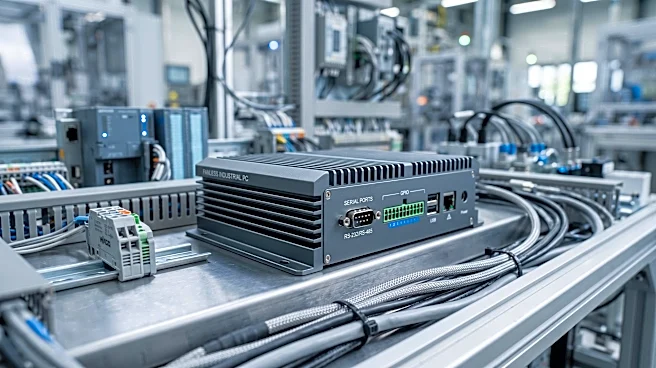
Tata Consulting Engineers emphasizes the critical role of communication protocols and physical layers in industrial automation, describing them as the backbone of industrial connectivity. A protocol defines the rules for data packaging, addressing, and transmission,
ensuring that receiving devices can interpret the information. Key elements of a protocol include framing, addressing, error checking, and data structure. Common industrial protocols discussed include Modbus (RTU and TCP), PROFIBUS (DP and PA), PROFINET, BACnet, TCP/IP, DeviceNet, OPC, and CAN Bus. The physical layer, or Layer 1, comprises the hardware—wires, connectors, and electrical signals—that carry the data. Examples of physical layers include RS-485, RS-232, Ethernet, and CAN Bus. The article stresses that while protocols and physical layers are generally independent, they must be compatible for effective communication, illustrating with Modbus RTU over RS-485 and Modbus TCP over Ethernet.
Why It's Important?
This detailed explanation of communication protocols and physical layers is vital for U.S. industries involved in manufacturing, energy, and infrastructure. The clarity provided by Tata Consulting Engineers helps businesses understand the foundational technologies that enable industrial automation and the Internet of Things (IoT). Efficient and reliable communication is crucial for optimizing production processes, ensuring safety, and facilitating data exchange across complex industrial environments. Misunderstandings or incompatibilities in these protocols can lead to significant operational disruptions, costly downtime, and security vulnerabilities. For U.S. companies, a strong grasp of these concepts is essential for making informed decisions on technology investments, system upgrades, and cybersecurity strategies, ultimately impacting their competitiveness and operational resilience in a rapidly evolving industrial landscape.
What's Next?
The industrial sector is expected to see continued evolution in communication protocols, driven by the increasing demand for real-time data, enhanced security, and seamless integration of diverse systems. Future trends will likely include the broader adoption of Industrial Ethernet-based protocols like PROFINET, which offer higher speeds and greater flexibility. There will also be a focus on developing more robust and secure protocols to protect against cyber threats in critical infrastructure. The convergence of IT and operational technology (OT) networks will necessitate protocols that can bridge these environments effectively. Additionally, advancements in wireless communication technologies tailored for industrial applications will likely emerge, offering greater mobility and flexibility in deployment. The ongoing development aims to create more intelligent, interconnected, and resilient industrial systems.
Beyond the Headlines
The intricate world of industrial communication protocols has profound implications for national security and economic stability. As industrial control systems become increasingly interconnected, the integrity and security of these communication channels are paramount. A vulnerability in a protocol or physical layer could be exploited, leading to disruptions in critical services such as power grids, water treatment, and manufacturing. This necessitates continuous research and development in secure communication technologies and robust cybersecurity frameworks. Furthermore, the choice of communication protocols can influence the longevity and interoperability of industrial equipment, impacting long-term investment decisions and the sustainability of industrial infrastructure. The ongoing effort to standardize and secure these foundational technologies is not just a technical challenge but a strategic imperative for maintaining a competitive and secure industrial base.