
What's Happening?
Redwire Corporation, a leader in space and defense technology, has been awarded a follow-on contract by Axiom Space to develop and deliver two Roll-Out Solar Array (ROSA) wings for Axiom Station’s second
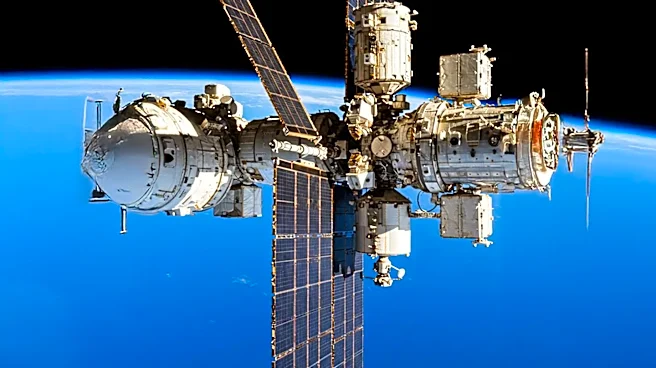
space station module. This new contract builds upon a previous agreement where Redwire was tasked with building ROSA wings for Axiom Space’s first module. According to Mike Gold, President of Redwire Space, the ROSA technology has a proven track record, including its use on the International Space Station (ISS), making it an ideal system to power Axiom Space’s commercial station. Dr. Jonathan Cirtain, CEO and President of Axiom Space, emphasized that Redwire’s ROSA hardware is crucial for establishing a sustainable commercial presence in Low-Earth Orbit (LEO). Axiom Station aims to provide a permanent commercial platform for microgravity research, product development, and human spaceflight missions. The first module is currently undergoing final assembly in Italy and will be transferred to Houston for integration and testing before its planned launch in 2028 from Kennedy Space Center in Florida. The second module is expected to launch less than a year after the first, eventually docking to form a four-crew-capable, free-flying space station.
Why It's Important?
This contract signifies a critical step in the development of commercial space infrastructure in the U.S. The continued collaboration between Redwire and Axiom Space underscores the growing reliance on private sector innovation for space exploration and commercialization. Redwire's ROSA technology, with its established reliability, is essential for providing the robust power needed to sustain Axiom Station, which will serve as a commercial hub for various nations and industries. This initiative is poised to expand access to LEO, fostering breakthroughs in science and technology through microgravity research, development, and manufacturing. The success of Axiom Station could revolutionize how space is utilized for commercial purposes, creating new economic opportunities and advancing scientific understanding. The project also highlights the U.S.'s commitment to maintaining leadership in space, transitioning from government-led missions to a more commercially driven space economy.
What's Next?
Axiom Space’s first module is in its final assembly phase in Turin, Italy, and will subsequently be moved to Houston for integration and testing, followed by transfer to the Kennedy Space Center in Florida for its planned launch in 2028. The second module, for which Redwire is now providing additional ROSA wings, is also preparing for final assembly at Thales Alenia Space and is slated for launch less than a year after the first. Once launched, the second module will loiter in orbit until it is ready to dock with the first, forming a fully operational, four-crew-capable free-flying space station. This phased deployment will enable Axiom Station to gradually expand its capabilities and capacity for commercial operations, microgravity research, and human spaceflight missions. The ongoing development and successful deployment of these modules will be crucial for establishing a permanent commercial platform in LEO.
Beyond the Headlines
The development of Axiom Station, powered by Redwire's advanced solar array technology, represents a significant shift towards the commercialization of space. This venture moves beyond traditional government-funded space programs, opening up new avenues for private companies and international partners to conduct research, manufacturing, and tourism in LEO. The establishment of a permanent commercial platform could democratize access to space, allowing more nations and private entities to participate in space activities. This commercial model could also drive down costs and accelerate innovation, fostering a more dynamic and competitive space industry. Furthermore, the focus on microgravity research and in-space manufacturing has the potential to yield groundbreaking discoveries and create novel products that could benefit life on Earth, ranging from advanced materials to pharmaceutical developments. The ethical and legal frameworks for commercial operations in space will also need to evolve to accommodate this new era of private space endeavors.