





What's Happening?
Embraer has successfully secured certification for its Praetor 500E midsize business jet from Brazilian, European, and U.S. regulatory bodies. This achievement follows the certification of its larger counterpart, the Praetor 600E, just a month prior.
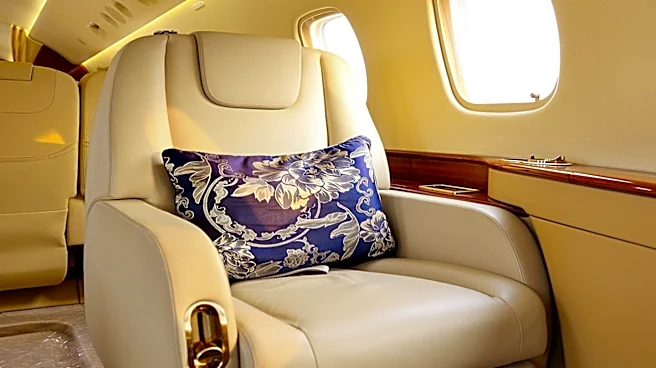
The Praetor 500E, an updated variant of the original Praetor 500, is now approved for operation in key global markets. The aircraft, which can accommodate nine passengers, boasts a range of 3,340 nautical miles and is powered by twin Honeywell HTF7500E turbofans. Embraer has introduced several enhancements to the 500E, including modern cabin management systems accessible via smartphones, new electronically-controlled leather seats, and an advanced LED lighting system. The company plans to produce these seats in-house at its Melbourne, Florida facility. The Praetor 500E is part of Embraer's strategy to compete with other midsize jets like Bombardier's Challenger series and Gulfstream's G280.
Why It's Important?
The certification of the Praetor 500E marks a significant milestone for Embraer, reinforcing its position in the competitive business aviation market. By achieving triple certification, Embraer can now offer the Praetor 500E to a broader range of international customers, potentially increasing its market share. The enhancements in cabin comfort and technology reflect the growing demand for more luxurious and efficient business jets. This development could lead to increased sales and production, benefiting Embraer's operations in both Brazil and the United States. Additionally, the in-house production of seats in Florida may create new job opportunities and stimulate local economic growth. The Praetor 500E's entry into the market could also intensify competition among major players in the business jet industry, prompting further innovations and improvements.
What's Next?
Embraer plans to begin deliveries of new orders for the Praetor 500E in 2029. As the company continues to expand its market presence, it may explore further enhancements and new models to meet evolving customer demands. The successful certification and anticipated deliveries could lead to strategic partnerships and collaborations with other aviation companies. Additionally, Embraer's focus on in-house production may result in further investments in its U.S. facilities, potentially leading to advancements in manufacturing processes and technologies. The company's ability to maintain its competitive edge will depend on its capacity to innovate and adapt to market trends.