





What's Happening?
Rockwell Automation, in collaboration with the Center for Automotive Research (CAR), has released a new white paper detailing the impact of artificial intelligence (AI), machine learning (ML), and automation on the automotive industry. The report, titled
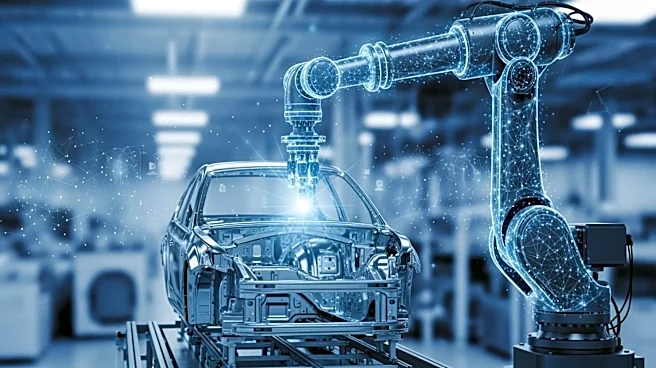
'Smart Manufacturing in Automotive: Deployment and Impact,' outlines how these technologies are transforming manufacturing processes, particularly in areas like electronics assembly and logistics, which have traditionally been challenging to automate. The integration of AI and ML is enhancing predictive maintenance and inspection accuracy, leading to significant reductions in unplanned downtime and improvements in equipment effectiveness and throughput.
Why It's Important?
The adoption of AI and ML in automotive manufacturing is crucial as it addresses the industry's need to increase efficiency and manage complexity amid rising global competition. By leveraging these technologies, manufacturers can improve decision-making and gain a competitive edge through enhanced performance and reduced operational disruptions. The report highlights a growing divide in the industry, where companies that quickly adopt these technologies are seeing measurable benefits, while those that lag may face challenges in maintaining competitiveness. This shift underscores the importance of strategic investment in smart manufacturing to ensure long-term success.
What's Next?
As the automotive industry continues to embrace smart manufacturing, companies will need to focus on scaling these technologies effectively to maximize their benefits. This includes addressing challenges related to integration and ensuring that AI and ML systems are aligned with broader business objectives. The report suggests that manufacturers who can rapidly implement these technologies will likely see continued improvements in quality, uptime, and productivity. Additionally, the ongoing development of AI and ML capabilities will likely lead to further innovations in manufacturing processes, potentially reshaping the industry's landscape.