
What's Happening?
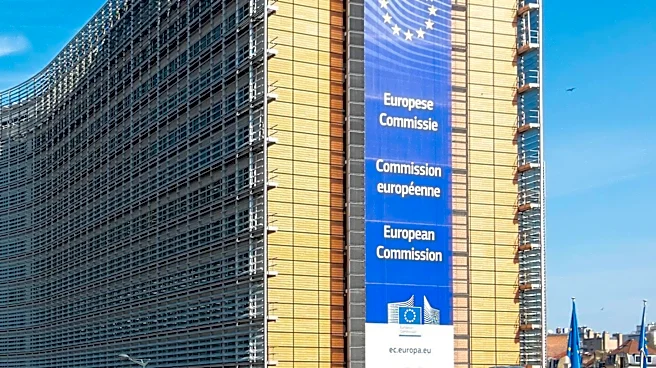
The European Commission has granted conditional approval for the $25 billion all-stock merger between Dutch paints group AkzoNobel and U.S. coatings maker Axalta. The approval, issued on November 6, 2026,
in Phase I of its review, is contingent upon AkzoNobel divesting its entire vehicle refinish coatings business within the European Economic Area (EEA). This includes a dedicated manufacturing plant, intellectual property, and staff. The merger cannot be finalized until the Commission approves a suitable buyer for the divested assets. Teresa Ribera, the Commission's Executive Vice-President for a Clean, Just and Competitive Transition, stated that these commitments are crucial to prevent suppliers from imposing high margins on car repairs through increased prices or reduced quality. The Commission identified significant concentration in the EEA vehicle refinish coatings market, where the top four suppliers account for 80-90% of sales, with Axalta being the market leader and AkzoNobel the fourth largest. High switching costs for garages, due to reliance on specific scanning and mixing equipment, also contributed to the Commission's concerns about potential harm to competition.
Why It's Important?
This decision is significant for the global coatings industry, particularly for U.S.-based Axalta, as it clears a major regulatory hurdle for the formation of Axanzo, the combined entity. The requirement to divest AkzoNobel's EEA vehicle refinish business will reshape the competitive landscape in Europe, potentially creating opportunities for other players in the automotive paint sector. For U.S. companies involved in cross-border mergers, this case highlights the stringent antitrust scrutiny by European regulators, especially in concentrated markets with high switching costs. The Commission's focus on preventing price increases and quality degradation for consumers underscores its commitment to market fairness. The outcome also signals that structural remedies, such as the complete divestiture of a business unit, are often preferred by regulators to address competition concerns in complex global deals. The ongoing reviews by the UK Competition and Markets Authority (CMA) and U.S. regulators, including Axalta's plan to divest its North American Building Products business, indicate a multi-jurisdictional approach to antitrust enforcement that impacts global corporate strategies.
What's Next?
AkzoNobel and Axalta must now identify and secure a buyer for AkzoNobel's EEA vehicle refinish business, with the European Commission's approval being a prerequisite for the merger's completion. This 'up-front buyer' commitment means the merger cannot close until a binding agreement with an approved purchaser is in place. The companies anticipate closing the merger in early 2027, at which point the combined entity will operate as Axanzo, with dual headquarters in Amsterdam and Philadelphia. Additionally, the UK CMA is expected to issue its Phase 1 decision by November 11, 2026, though the EU remedy is expected to cover the UK overlap. In the United States, Axalta has announced plans to divest its North American Building Products business to satisfy regulatory requirements. The successful execution of these divestitures and securing final regulatory approvals will be critical next steps for the formation of the new coatings giant.
Beyond the Headlines
The AkzoNobel-Axalta merger case illustrates broader trends in global antitrust enforcement, emphasizing the increasing coordination among international regulatory bodies. The Commission's detailed analysis of market concentration and switching costs in the vehicle refinish sector sets a precedent for how mergers in specialized industrial markets will be evaluated. The decision also highlights the growing influence of environmental and competitive transition considerations, as evidenced by Executive Vice-President Teresa Ribera's statement on preventing high margins and ensuring quality. This suggests that future merger reviews may increasingly incorporate broader public interest factors beyond traditional competition metrics. For companies, the case underscores the importance of early identification of potential antitrust overlaps and proactive engagement with regulators, including offering comprehensive structural remedies, to avoid lengthy Phase II investigations and ensure deal progression. The requirement for an 'up-front buyer' also adds complexity to the deal timeline, necessitating parallel processes for divestiture and merger approval.