
What's Happening?
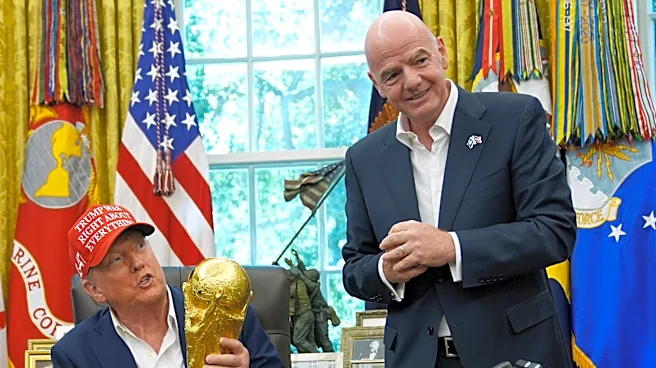
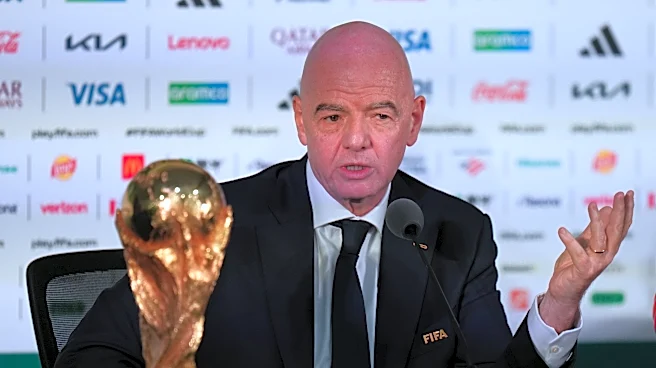
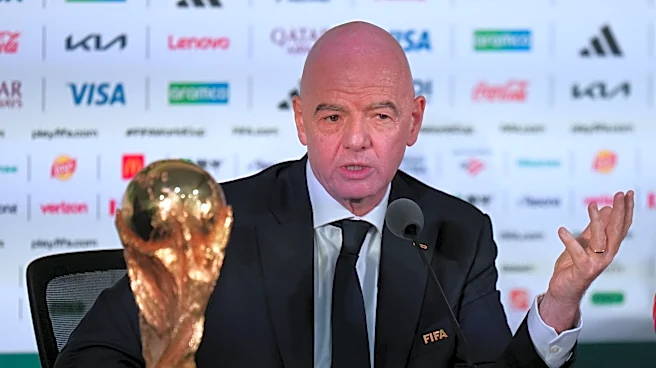
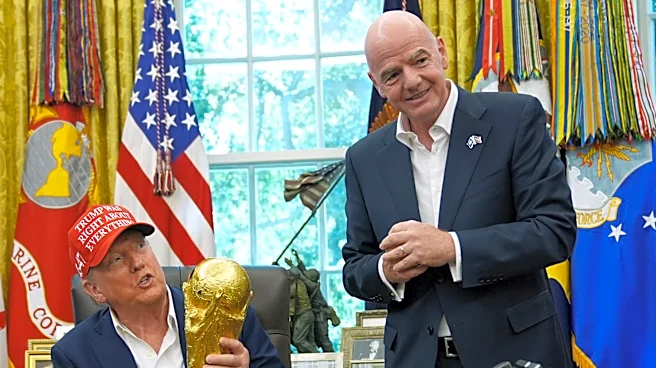
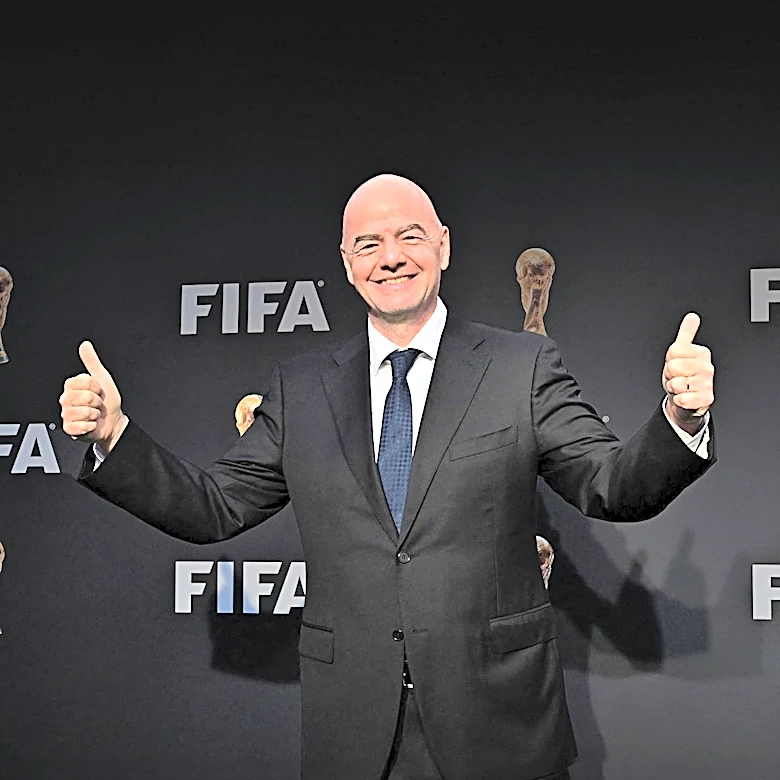
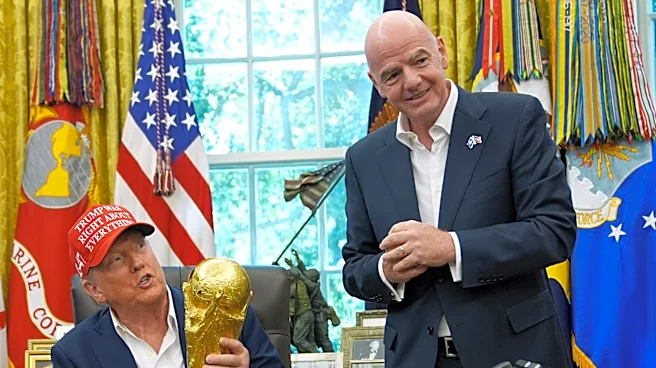
FIFA President Gianni Infantino has retracted a proposal to sell stakes in a new World Cup commercial entity to private investors, including a group led by Joshua Kushner, the brother of President Trump's son-in-law, Jared Kushner. The plan faced significant
opposition from the Union of European Football Associations (UEFA), which threatened to boycott FIFA competitions. UEFA's resistance was based on concerns that the proposal would commercialize the World Cup, shifting focus from the sport to shareholder interests. Infantino's plan involved creating a company, FIFA Forward Enterprises, to manage FIFA's main events, with private investment expected to generate $4.2 billion for global soccer development. However, the secrecy and potential impact on the sport's integrity led to widespread criticism and the eventual withdrawal of the proposal.
Why It's Important?
The abandonment of the investment plan underscores the tension between commercial interests and the preservation of sports integrity. UEFA's strong opposition highlights the potential risks of privatizing aspects of international soccer, which could prioritize profit over the sport's traditional values. The proposal's failure also reflects the influence of European soccer associations in global football governance. The involvement of President Trump's family in the investment group raised ethical concerns, suggesting potential conflicts of interest and the blurring of lines between sports and politics. This development may impact FIFA's future governance and its relationship with member associations, as well as the broader debate on the commercialization of sports.
What's Next?
FIFA's next steps involve addressing the concerns raised by UEFA and other associations to restore trust and unity within the organization. Infantino faces reelection next March, and this controversy may affect his chances of securing another term. Potential challengers have until November 18 to declare their candidacy. FIFA must also navigate the upcoming under-20 Women's World Cup in Poland and the Women's World Cup in Brazil, ensuring these events proceed smoothly without the shadow of the recent controversy. The organization may need to provide assurances that future governance will not involve private ownership, as demanded by UEFA.