









What's Happening?
MKS Inc., a global technology provider, has announced a $25 million expansion of its Atotech equipment manufacturing site in Guangzhou, China. This expansion will add approximately 323,000 square feet to the facility, doubling its production capacity
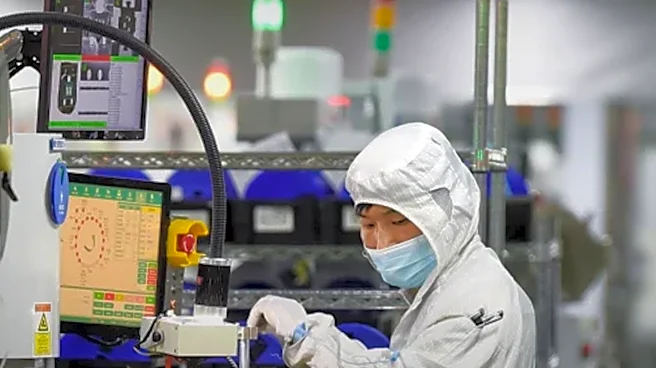
by the fourth quarter of 2027. The investment is aimed at supporting the growing demand in AI-related markets, particularly in semiconductor and advanced packaging applications. The expanded facility will enhance production, assembly, logistics, and testing capabilities, while also incorporating a photovoltaic power system to improve energy efficiency. This move underscores MKS's commitment to strengthening its presence in Asia and supporting its customers in the dynamic electronics manufacturing sector.
Why It's Important?
The expansion of MKS's manufacturing capabilities in China is a strategic move to capitalize on the burgeoning AI market, which is driving demand for advanced electronics and semiconductor technologies. By increasing its production capacity, MKS aims to improve its responsiveness to customer needs and enhance its competitive position in high-growth markets. The integration of sustainable energy solutions also aligns with global trends towards more environmentally friendly manufacturing practices. This development is significant for the U.S. technology sector, as it highlights the increasing interdependence of global supply chains and the importance of maintaining competitive manufacturing capabilities in key regions.
What's Next?
As MKS progresses with its expansion plans, the company will likely focus on optimizing its operations to meet the anticipated increase in demand for AI-related technologies. The completion of the expanded facility is expected to bolster MKS's ability to deliver innovative solutions and maintain its leadership in the electronics manufacturing industry. Stakeholders will be watching how this expansion impacts MKS's market share and its ability to drive technological advancements. Additionally, the company's commitment to sustainable practices may influence other industry players to adopt similar strategies, potentially leading to broader shifts in manufacturing standards.