
What's Happening?
GUSS Automation, a wholly owned subsidiary of John Deere, is set to integrate Ouster’s Rev8 OS0 native-color digital LiDAR sensors into its next generation of autonomous orchard machines. This integration
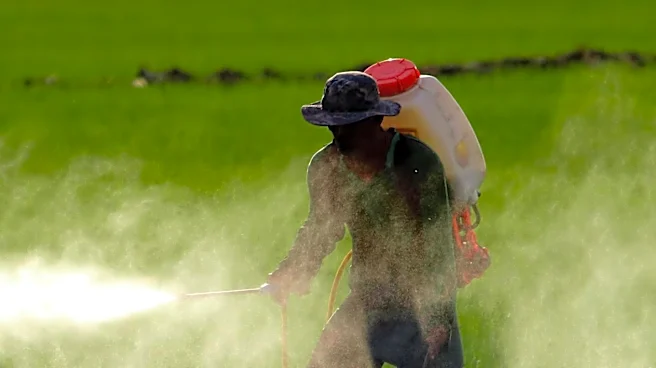
aims to significantly improve the machines' ability to navigate complex agricultural environments, particularly dense orchards and vineyards where traditional GPS-based systems often lack sufficient precision. The Rev8 sensor platform combines 3D depth data with native-color imaging and is designed for rugged outdoor applications, capable of operating in challenging conditions such as dust, agricultural spray, and dense vegetation. This technology will support autonomous spraying operations for Orchard GUSS and Mini GUSS machines, allowing a single operator to monitor up to eight autonomous machines simultaneously from a laptop.
Why It's Important?
This development is important for the U.S. agricultural industry, especially for high-value crop production, which faces significant challenges in navigation due to dense vegetation, uneven terrain, and varying lighting conditions. The integration of advanced LiDAR technology into autonomous machinery addresses labor shortages and enhances operational efficiency by enabling more precise and reliable autonomous operations. For growers, this means improved productivity and greater operational flexibility, as machines can accurately identify tree trunks, crop rows, ground contours, and obstacles. The ability to monitor multiple machines with a single operator can lead to substantial labor savings and optimized resource allocation, directly impacting the profitability and sustainability of U.S. farms specializing in orchards and vineyards.
What's Next?
The successful integration of LiDAR technology into autonomous orchard machines by John Deere's subsidiary GUSS Automation is expected to pave the way for broader applications of similar LiDAR-based autonomous systems in agriculture. Beyond spraying, this technology could support other orchard and vineyard operations that require precise navigation, mapping, and obstacle detection. This advancement highlights a growing trend towards robotics, computer vision, and autonomous navigation in precision agriculture. Equipment manufacturers will likely continue to invest in these technologies to enhance the safety and efficiency of agricultural machinery in complex farming environments, potentially leading to further automation across various farming tasks and a reduction in manual labor requirements.
Beyond the Headlines
The adoption of advanced autonomous technology in agriculture, as demonstrated by John Deere's initiative, signifies a deeper transformation in how food is produced. This shift could lead to increased yields and reduced waste through highly precise application of resources, contributing to food security and environmental sustainability. However, it also raises questions about the future of agricultural labor, potentially displacing manual workers and requiring new skill sets for operating and maintaining these sophisticated machines. Furthermore, the reliance on complex technology could create new dependencies on tech providers and data infrastructure, potentially impacting the autonomy of individual farmers. The ethical implications of increasingly automated food production, including the potential for reduced human oversight and the impact on rural communities, will also need to be considered as these technologies become more widespread.