





What's Happening?
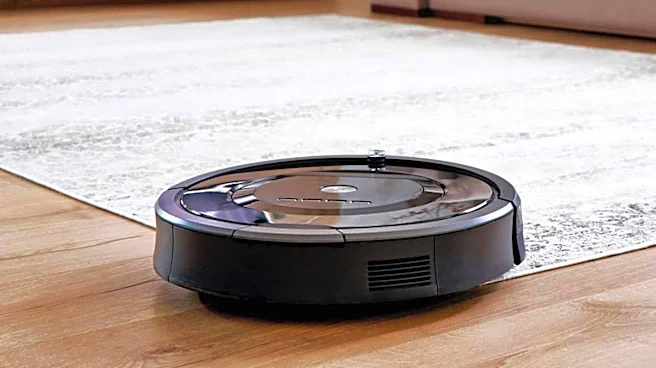
iRobot has introduced the Roomba Duo, a conceptual robot vacuum system that pairs a larger vacuum and steam-mop with a smaller companion robot. This innovative system aims to address the limitations of single robot cleaners by having the smaller robot tackle
hard-to-reach areas like under furniture, edges, and corners. Both robots utilize ClearView Pro LiDAR and PrecisionVision AI for navigation and obstacle avoidance, with elevated AI cameras on the main robot creating detailed maps. The system includes a shared AutoWash dock that handles maintenance tasks such as washing and drying mops, emptying dust, and managing water, designed to minimize user intervention for several months. The Roomba Duo is currently a concept and not yet planned for market release, but it showcases iRobot's vision for future autonomous floor cleaning.
Why It's Important?
The Roomba Duo concept highlights a significant potential shift in the robot vacuum industry, moving beyond single-unit solutions to multi-robot systems. This innovation could redefine consumer expectations for comprehensive home cleaning, particularly in addressing the persistent challenge of cleaning corners and tight spaces that traditional robot vacuums struggle with. For the U.S. market, this could lead to a new category of premium cleaning devices, potentially increasing the average price point for advanced robot vacuums but also delivering a more thorough cleaning experience. It also signals iRobot's commitment to pushing the boundaries of autonomous cleaning technology, which could spur competitors to develop similar multi-robot or more specialized solutions, ultimately benefiting consumers with more effective and versatile cleaning options.
What's Next?
While the Roomba Duo is currently a concept, its unveiling suggests that iRobot is exploring advanced solutions to common robot vacuum limitations. If brought to market, it would likely face challenges related to manufacturing complexity, cost, and consumer adoption of a multi-robot system. Future developments might include refining the coordination between the two robots, optimizing their cleaning paths, and potentially integrating more advanced AI for even smarter obstacle detection and cleaning strategies. The success of such a system would depend on its ability to deliver a demonstrably superior cleaning performance that justifies its likely higher price point, potentially setting a new standard for high-end robot vacuum systems in the U.S. market.
Beyond the Headlines
The Roomba Duo concept touches upon broader themes of automation and the increasing sophistication of AI in everyday household appliances. The idea of specialized robots working in tandem within a home environment opens up possibilities for other multi-robot systems designed for various household tasks, from security to maintenance. This development also raises questions about the future of human interaction with technology, as devices become more autonomous and require less direct intervention. Furthermore, the collection of detailed home maps and obstacle data by advanced AI systems could bring forth discussions on data privacy and security, as these devices gather intimate knowledge of users' living spaces. The Roomba Duo represents a step towards a more integrated and intelligent automated home.