





What's Happening?
The Export-Import Bank of the United States (EXIM) has issued a non-binding indicative term sheet for up to $6 billion in financing for the Argentina LNG project. This project is a proposed $51 billion integrated gas-export initiative located in Vaca
Muerta, Argentina. The EXIM financing aims to support the procurement of U.S. goods and services essential for the project's infrastructure development and production activities. This includes a contract awarded to McDermott for engineering, procurement, construction, and commissioning of a natural gas liquids fractionation and gas treatment facility. Additionally, U.S. firm Pumpco, a subsidiary of MasTec, Inc., in partnership with Bonatti and Contreras Hnos., has secured an engineering, procurement, and construction contract exceeding $1 billion for the project's export pipeline system, contingent on a final investment decision. The term sheet is part of a broader U.S.-Argentina 'Build the Future Framework' and the 'Andes-Atlantic Corridor' initiative, which seeks to mobilize up to $7 billion in financing through 2027 for various sectors including energy, critical minerals, and digital infrastructure.
Why It's Important?
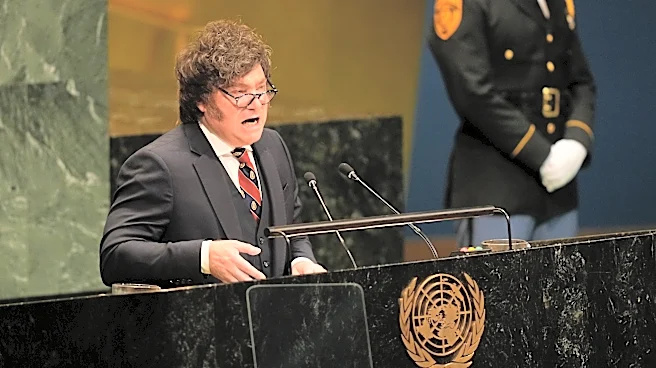
This indicative financing from EXIM is significant as it demonstrates U.S. commitment to supporting major energy infrastructure projects abroad, particularly those that utilize American goods and services. For the U.S. economy, this could translate into substantial export opportunities and job creation within the manufacturing and engineering sectors. Companies like McDermott and MasTec stand to benefit directly from contracts related to the Argentina LNG project. For Argentina, this backing from EXIM could be crucial in attracting further foreign investment and advancing the $51 billion project, which is a key initiative for Argentine President Javier Milei to boost the nation's infrastructure and energy exports. The project aims to leverage Argentina's vast shale gas resources in Vaca Muerta, potentially transforming the country into a significant global LNG supplier. The 'Andes-Atlantic Corridor' initiative also signals a broader U.S. strategy to strengthen economic ties and infrastructure development in the region, fostering long-term partnerships and promoting U.S. commercial interests.
What's Next?
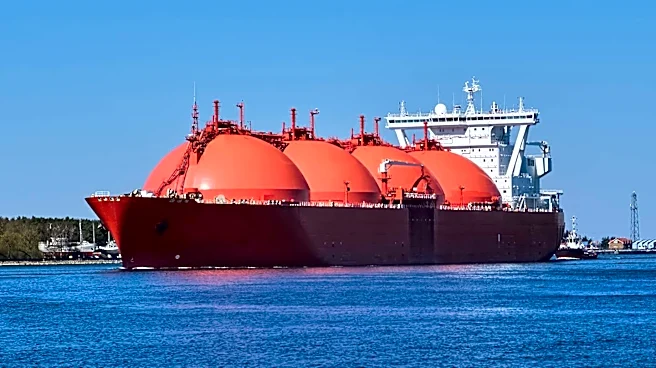
The EXIM financing remains non-binding and indicative, meaning the project and its associated financing are still subject to a final investment decision. Key details such as pricing, maturity, security, and the final mix of EXIM financing instruments have not yet been disclosed. The project partners, including Argentine energy group YPF, Italy’s Eni, and Abu Dhabi-based XRG, have applied to join Argentina's Large Investment Incentive Regime (RIGI), which would further support the development of this large-scale LNG export project. A final investment decision is targeted by the end of 2026. If the project progresses beyond the indicative stage and secures final approval, it will lead to the full implementation of the U.S. procurement contracts and the disbursement of the EXIM financing. This would also pave the way for the construction of the integrated LNG value chain, including gas production, processing, transport infrastructure, and LNG export capacity, with two floating liquefied natural gas units planned offshore Rio Negro province.
Beyond the Headlines
The EXIM's indicative financing for the Argentina LNG project highlights a strategic alignment between U.S. economic interests and geopolitical objectives. By supporting such a large-scale energy project, the U.S. is not only promoting its export industries but also potentially influencing energy security and supply chains in the Western Hemisphere. The 'Andes-Atlantic Corridor' initiative, under which this financing falls, suggests a broader U.S. foreign policy approach focused on infrastructure development as a tool for economic diplomacy and regional stability. This could lead to increased U.S. influence in Latin America and create a precedent for similar partnerships in other critical sectors. The project also underscores the growing global demand for liquefied natural gas and the strategic importance of countries with significant shale gas reserves like Argentina. The ethical and environmental implications of such a large fossil fuel project will likely remain a subject of debate, balancing economic development with climate change concerns.