



What's Happening?
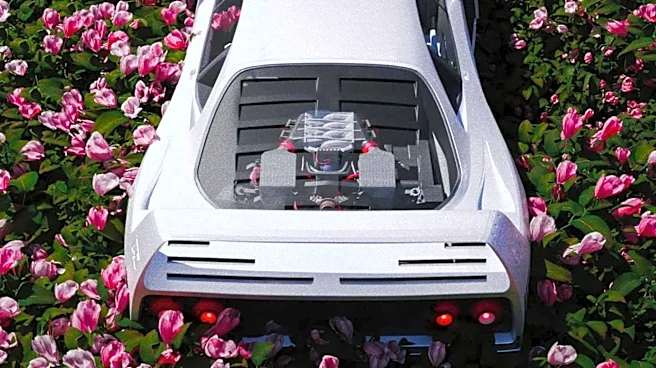
The ownership experience of a Ferrari F40, a highly coveted classic car, is highlighted through the story of an owner, referred to as Nate, who inherited the vehicle. Despite its iconic status and significant value, the F40 proved to be a high-maintenance
machine, requiring extensive and costly repairs. Nate spent over $50,000 and more than a year attempting to get the 478-hp 2.9-liter V-8 engine properly tuned. The diagnostic process itself was complex, involving specialized equipment and even international translation services for diagnostic software. Ultimately, Nate concluded that the F40 was not providing the enjoyable driving experience he sought, leading him to sell the car for $2.4 million and acquire a more practical Ineos Grenadier SUV.
Why It's Important?
This narrative underscores the complex realities of owning ultra-high-value classic cars, particularly those with advanced engineering for their era. While such vehicles represent significant investments and cultural icons, their maintenance demands can be prohibitive, impacting the owner's ability to actually drive and enjoy them. The story illustrates a shift in priorities for some car enthusiasts, moving from pure collection and static appreciation to a desire for drivable and practical experiences. It also highlights the specialized and often global nature of classic car maintenance, where parts and expertise can be scarce and expensive. This trend could influence the market for classic cars, potentially favoring models that offer a more accessible and less demanding ownership experience.
What's Next?
The experience of owners like Nate may contribute to a broader re-evaluation of what constitutes a desirable classic car. While the F40's value is unlikely to diminish, the emphasis on usability and driving enjoyment over pure collectibility could grow among a segment of enthusiasts. This might lead to increased demand for more robust or easily maintainable classic models, or for modern vehicles that offer a blend of performance and practicality. The challenges of maintaining highly specialized older vehicles could also spur innovation in classic car restoration and parts manufacturing, potentially leading to more accessible solutions for preserving these automotive treasures. The story also suggests a growing appreciation for vehicles that facilitate family experiences and diverse activities, such as off-roading, over purely performance-oriented machines.
Beyond the Headlines
The F40's story touches upon the emotional and psychological aspects of car ownership, particularly when dealing with a vehicle that carries immense sentimental and financial weight. Nate's realization that the 'best thing about owning an F40 is telling your friends you have an F40' speaks to the social currency and status associated with such cars, which can sometimes overshadow the actual driving experience. His decision to sell the F40 for a Grenadier and focus on creating new memories with his children in a more versatile vehicle reflects a deeper shift in values, prioritizing personal experiences and family over the prestige of a garage queen. This narrative challenges the traditional definition of a 'car guy' and suggests that true automotive passion can manifest in diverse forms, not solely through the ownership of exotic, high-maintenance machines.