
What's Happening?
Jessica Chastain has publicly stated her interest in reprising her role as Celia Rae Foote from the 2011 film 'The Help'. Chastain expressed a desire to explore a storyline where her character and Octavia
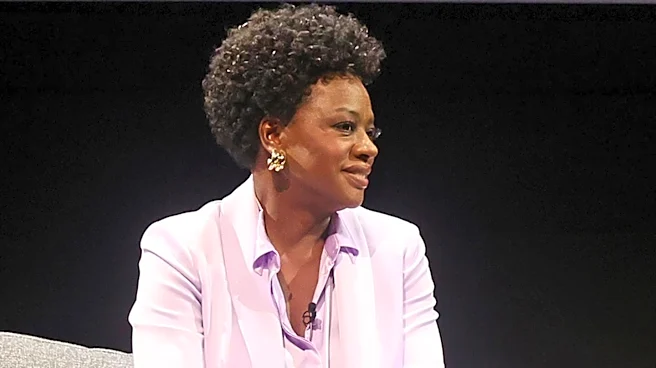
Spencer's character, Minny, live together and raise a child, envisioning a potential sequel. This sentiment contrasts with other cast members' views on the film. Viola Davis, who was also nominated for an Oscar for her role, has expressed regret over participating in the movie, citing concerns about its 'white savior' narrative and feeling that it did not fully represent the truth. Bryce Dallas Howard, another cast member, acknowledged the film's perspective was from white characters and storytellers, despite forming deep friendships during production. 'The Help' was a commercial success, grossing over $200 million on a $25 million budget, and earned Octavia Spencer an Oscar and a Golden Globe.
Why It's Important?
The differing perspectives among the cast of 'The Help' highlight ongoing discussions within the entertainment industry regarding representation, narrative control, and the portrayal of historical events, particularly those involving racial injustice. Chastain's interest in revisiting the film underscores a desire to explore character development and relationships further, potentially offering a new lens on the story. Conversely, the regrets expressed by Davis and Howard reflect a growing awareness and critical examination of how stories about marginalized communities are told, and by whom. This discourse is crucial for shaping future film productions, encouraging more authentic and nuanced storytelling, and ensuring that the voices of those directly affected by historical injustices are central to their narratives. The commercial success of the film, despite its controversial reception among some critics and cast members, also points to the complex relationship between audience appeal and critical integrity in Hollywood.
What's Next?
While Jessica Chastain has voiced her interest in a potential follow-up to 'The Help,' there are no current indications of such a project being in development. The varied sentiments among the original cast members, particularly Viola Davis's regret, suggest that assembling the original ensemble for a sequel could be challenging. The ongoing dialogue about the film's narrative and its implications for racial representation in cinema is likely to continue influencing future projects and casting decisions within the industry. Filmmakers and studios may face increased scrutiny regarding the authenticity and sensitivity of their storytelling, especially when addressing historical or socially charged topics. This could lead to a greater emphasis on diverse creative teams and consultants to ensure more inclusive and accurate portrayals.
Beyond the Headlines
The divergent opinions surrounding 'The Help' extend beyond mere artistic preferences, touching upon deeper ethical and cultural implications within the film industry. The concept of a 'white savior' narrative, which has been a point of criticism for the film, raises questions about who is empowered to tell certain stories and whose perspectives are prioritized. This debate reflects a broader societal reckoning with historical injustices and the ongoing struggle for equitable representation. The film's commercial success juxtaposed with its critical reception among some Black artists underscores a persistent tension between mainstream appeal and authentic storytelling. This situation prompts a re-evaluation of how Hollywood addresses sensitive topics, encouraging a shift towards narratives that genuinely empower marginalized voices rather than centering dominant perspectives. The conversation around 'The Help' serves as a case study for the evolving standards of cultural sensitivity and ethical responsibility in media production.