





What's Happening?
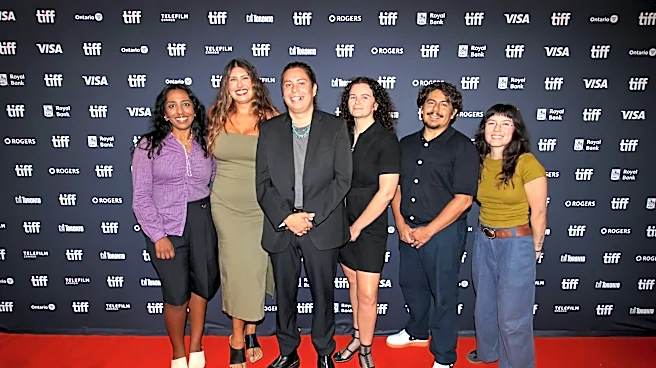
The 2026 Toronto International Film Festival (TIFF) included the documentary 'Turtle Island Rap' in its lineup. Directed by Alexandra Lazarowich, the film follows three Indigenous rappers—A$h Da Hunter, Wiidaaseh, and Travis Thompson—as they pursue success
in music and search for belonging. The documentary adopts an intimate approach, immersing viewers in the artists' daily lives and struggles rather than relying on traditional interviews. While it effectively portrays the musicians' personal journeys and family backgrounds, the film has been noted for its limited exploration of how their Indigenous heritage and cultural identities specifically influence their music. This omission is considered curious given the documentary's focus on Indigenous artists.
Why It's Important?
The inclusion of 'Turtle Island Rap' in a major international film festival like TIFF highlights the growing recognition of Indigenous voices and narratives within the global film industry. For U.S. audiences, this offers an opportunity to engage with the experiences and artistic expressions of Indigenous communities, fostering greater understanding and cultural exchange. The film's intimate portrayal of the rappers' struggles and aspirations can resonate with broader themes of identity, belonging, and the pursuit of dreams, which are universally relatable. However, the critique regarding the film's limited exploration of the connection between Indigenous heritage and music underscores a broader challenge in documentary filmmaking: balancing personal narratives with deeper cultural insights, especially when representing marginalized communities.
What's Next?
Following its premiere at TIFF, 'Turtle Island Rap' may seek distribution in the U.S. and other international markets, potentially through streaming platforms or independent film circuits. Its reception at TIFF could influence its future visibility and impact. The film's critical reception, particularly concerning its depth of cultural insight, might also spark discussions within the documentary filmmaking community about best practices for representing Indigenous stories. Future screenings and discussions could provide platforms for the filmmakers and artists to further elaborate on the themes presented in the documentary, potentially enriching the audience's understanding of the intersection between Indigenous identity and contemporary music.
Beyond the Headlines
The documentary's approach, which prioritizes intimacy over explicit cultural analysis, raises questions about the role of filmmakers in interpreting and presenting cultural narratives. While an intimate portrayal can build empathy, the perceived lack of depth regarding Indigenous heritage in 'Turtle Island Rap' highlights a potential tension between personal storytelling and broader cultural education. This could prompt a re-evaluation of how Indigenous stories are told and consumed, encouraging filmmakers to consider how to more fully integrate cultural context without sacrificing personal authenticity. The film's presence at TIFF also contributes to the ongoing dialogue about representation and diversity in media, pushing for more nuanced and comprehensive portrayals of diverse communities.