
What's Happening?
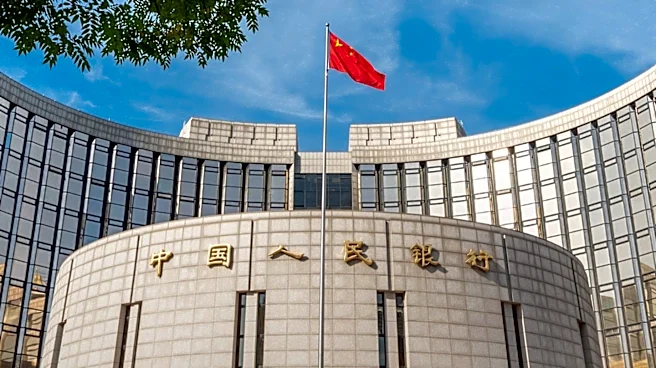
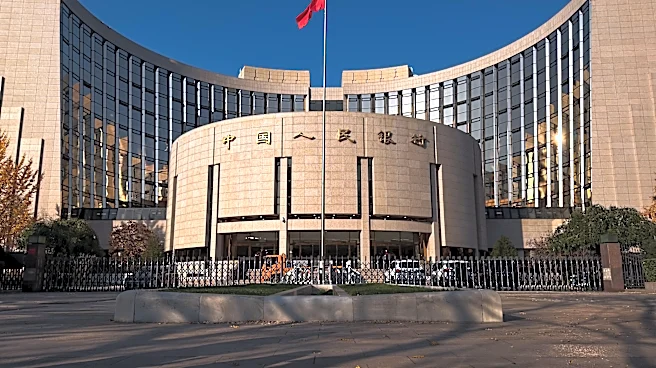
The People's Bank of China (PBOC) is anticipated to set its daily USD/CNY reference rate at 6.6604, according to Reuters estimates. This daily fixing, announced around 0115 GMT (2115 US Eastern time),
is a critical indicator in Asian foreign exchange markets. China operates a managed floating exchange rate system, allowing the renminbi (yuan) to trade within a 2% band around this daily midpoint. The PBOC determines this rate based on various factors, including the previous day's closing price, movements in major currencies like the US dollar, broader international FX conditions, and domestic economic considerations such as capital flows, growth momentum, and financial stability objectives. This process is not purely mechanical, granting policymakers discretion to influence market expectations. Once the midpoint is set, onshore USD/CNY trades within its allowable band, with the central bank potentially intervening to manage volatility through direct buying or selling of yuan, liquidity adjustments, or guidance via state-owned banks.
Why It's Important?
The PBOC's daily USD/CNY reference rate is a significant policy signal for global investors, particularly those in the U.S. and international financial markets. It offers insight into Beijing’s currency priorities, balancing competitiveness, capital stability, and financial market confidence. A stronger-than-expected yuan midpoint typically suggests the PBOC is resisting depreciation pressures, while a weaker fixing might indicate tolerance for a softer currency, often in response to US dollar strength or domestic economic challenges. In periods of heightened global volatility, such as shifts in U.S. interest rate expectations, trade tensions, or capital flow pressures, this fixing gains even greater importance. For U.S. businesses engaged in trade with China, the yuan's value directly impacts the cost of goods and services, affecting import and export competitiveness. Fluctuations can influence corporate earnings and investment decisions, making the PBOC's guidance a key factor in strategic planning.
What's Next?
The immediate next step will be the official announcement of the USD/CNY reference rate by the PBOC. Following this, market participants will closely observe the yuan's trading behavior within its prescribed 2% band. Any significant deviation or sustained pressure towards either end of the band could trigger intervention from the PBOC, which might involve direct currency operations or adjustments to liquidity. Investors will continue to analyze the fixing for clues regarding China's economic policy direction, especially concerning its stance on currency valuation amidst global economic shifts and U.S. monetary policy developments. Future fixings will also be scrutinized for consistency or changes in the PBOC's approach, providing ongoing signals about China's economic priorities and its management of the renminbi's international value.
Beyond the Headlines
The PBOC's managed floating exchange rate system and its daily reference rate highlight a broader tension between market forces and state control in China's financial system. While the system allows for some market-driven movement, the PBOC retains significant discretion, making the yuan's value a tool for economic policy rather than purely a reflection of supply and demand. This approach has long been a point of discussion in international economic relations, particularly with the U.S., regarding fair trade practices and currency manipulation. The PBOC's ability to guide market expectations through its fixing can influence global capital flows and commodity prices, impacting U.S. industries and consumers. The ongoing interplay between China's domestic economic goals and its international financial obligations, as reflected in its currency policy, will continue to shape global economic dynamics and trade relationships.