




What's Happening?
Infrared saunas are being highlighted as a suitable option for night shift workers seeking a short, low-key wind-down routine before daytime sleep. Unlike traditional saunas, infrared saunas operate without stones or steam, maintaining a milder air temperature.
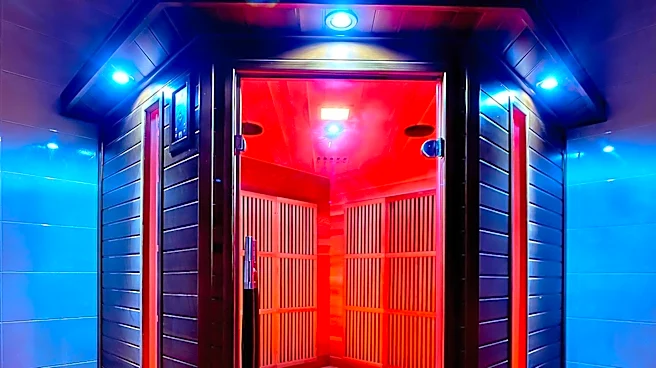
The Paramount Far Infrared Indoor Sauna, for instance, can reach temperatures between 135°F and 140°F, depending on the room's ambient temperature, which Salus recommends keeping around 70°F for optimal heat-up. This particular model uses six carbon low-EMF far infrared heating elements and features an interior LED control panel, Bluetooth audio, and chromotherapy lighting with a red light feature. It is designed for easy assembly, typically taking two to six hours with two people, and runs on a 120-volt, 15-amp dedicated circuit. The interior dimensions are 43 by 39 inches by 70 inches tall, accommodating one person comfortably or two to share. The construction uses natural hemlock with a clear tempered glass door.
Why It's Important?
The integration of infrared saunas into the routines of night shift workers addresses a significant challenge: achieving quality sleep during daylight hours. Night shift work disrupts the body's natural circadian rhythm, making it difficult to fall asleep and stay asleep. The gentle warmth of an infrared sauna, followed by a cool-down, can promote relaxation and potentially aid in the transition to sleep, aligning with research suggesting that warmth followed by cooling can be a reasonable part of a wind-down routine. This is particularly important for the 15% of U.S. workers who operate on non-daytime schedules, including nurses, factory workers, and first responders. Providing accessible and effective tools for sleep improvement can lead to better health outcomes, reduced sleepiness-related accidents, and improved overall well-being for this critical segment of the workforce. The convenience of a home sauna also eliminates the need for an additional stop at a gym or spa, which can further delay bedtime for already sleep-deprived individuals.
What's Next?
As awareness of the unique sleep challenges faced by night shift workers grows, there may be an increased demand for home-based wellness solutions like infrared saunas. Manufacturers and retailers are likely to continue emphasizing the benefits of these products for relaxation, recovery, and sleep improvement. Further research specifically targeting the impact of saunas on night shift workers' daytime sleep could provide more definitive evidence and drive wider adoption. Additionally, the market may see more innovations in sauna technology, such as enhanced smart controls and energy-efficient designs, to cater to the evolving needs of consumers. Companies like Salus Saunas, Almost Heaven Saunas, and JNH Lifestyles are already offering various models, and this trend is expected to continue with a focus on user-friendly assembly and integration into smart home systems.
Beyond the Headlines
The discussion around infrared saunas for night shift workers touches upon broader societal implications concerning work-life balance and public health. The prevalence of shift work highlights a systemic issue where a significant portion of the workforce operates against natural biological rhythms, leading to potential health disparities. The adoption of personal wellness technologies like home saunas reflects a growing trend of individuals taking proactive steps to manage their health and well-being in the face of demanding work schedules. This also raises questions about employer responsibility in supporting the health of their night shift employees, potentially through wellness programs or subsidies for such equipment. The emphasis on low-EMF heating elements and sustainable materials in sauna construction also points to an increasing consumer demand for health-conscious and environmentally responsible products, influencing manufacturing practices across the wellness industry.