






What's Happening?
U.S. retailers are increasingly deploying sophisticated in-store technologies to track shoppers, manage inventory, and enhance customer experiences. These technologies include micro-location awareness systems like Apple's iBeacon, which uses Bluetooth
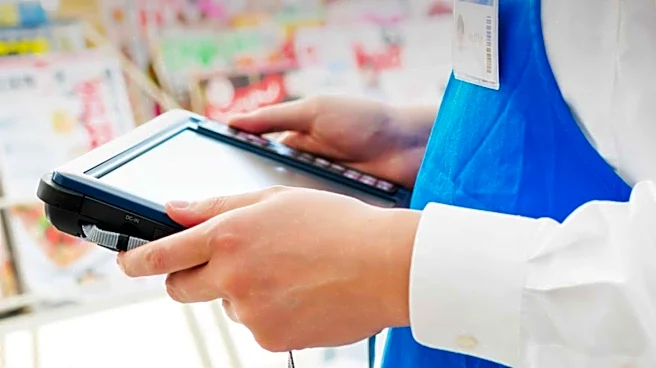
Low Energy (BLE) transmitters to pinpoint customer proximity and deliver targeted promotions. RFID technology is being utilized for efficient inventory management, particularly for 'Buy Online Pickup In-Store' (BOPIS) and omnichannel strategies, significantly improving inventory accuracy from approximately 70% to 98%. Additionally, in-store media networks are evolving, with retailers like Walmart having previously experimented with digital signage for advertising. Computer vision, an AI branch, is transforming traditional surveillance into active operational intelligence by interpreting camera feeds to detect empty shelves, manage queues, and track product movement. These advancements move beyond basic anti-shoplifting measures, turning every aisle into a data-collection point to optimize store operations and customer engagement.
Why It's Important?
The widespread adoption of these in-store technologies is crucial for U.S. retailers facing intense competitive pressures and evolving consumer expectations. Enhanced inventory accuracy through RFID technology directly impacts sales by ensuring product availability for both in-store and online channels, reducing lost sales due to stockouts. Micro-location awareness allows for highly personalized marketing, potentially increasing impulse purchases and customer satisfaction. Computer vision systems offer significant operational efficiencies by automating tasks like shelf monitoring and queue management, freeing up staff for higher-value customer interactions. This shift from passive surveillance to active operational intelligence helps retailers optimize store layouts, make smarter staffing decisions, and respond faster to in-store issues. Ultimately, these technologies are vital for retailers to remain competitive, improve profitability, and meet the demands of a digitally-savvy consumer base, impacting everything from supply chain logistics to personalized shopping experiences.
What's Next?
The future of in-store technology will likely see further integration of AI and data analytics to create more seamless and personalized shopping environments. Retailers are expected to continue investing in computer vision for real-time insights into customer behavior and store operations, moving beyond pilot programs to full-scale deployment. The focus will be on connecting these visual insights with existing retail systems like POS, ERP, and CRM to enable automated business actions. There will also be an increased emphasis on agentic commerce, where AI agents will leverage structured product data, often derived from computer vision, to assist customers with product discovery and purchasing decisions. As these technologies become more prevalent, retailers will need to address data privacy and compliance concerns, particularly regarding biometric data and customer tracking, to build trust and ensure ethical implementation. The goal is to create a more efficient, responsive, and customer-centric retail experience.
Beyond the Headlines
The deeper implications of these in-store technologies extend to significant ethical and societal considerations, particularly concerning consumer privacy. The ability to track shoppers' movements, dwell times, and even predict purchasing intent raises questions about the extent of data collection and its potential misuse. While retailers aim to enhance customer experience and operational efficiency, the line between personalized service and intrusive surveillance can become blurred. The increasing reliance on AI and computer vision also necessitates robust discussions around algorithmic bias and accountability, ensuring that these systems do not inadvertently discriminate or create unfair shopping experiences. Furthermore, the shift towards highly automated stores could impact retail employment, requiring a re-evaluation of workforce skills and roles. The long-term success of these technologies will depend not only on their technical capabilities but also on transparent communication with consumers and adherence to evolving ethical guidelines and data protection regulations.