




What's Happening?
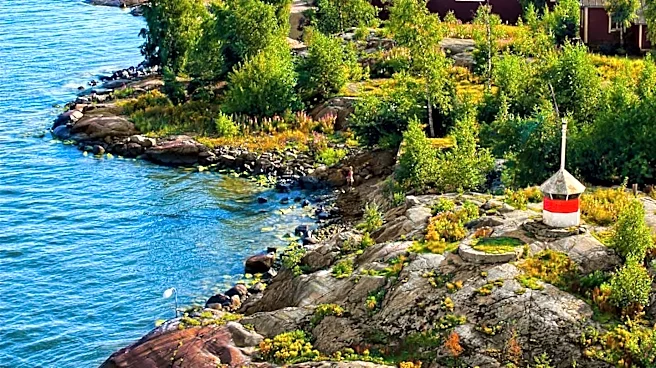
Gotland, a Swedish island in the Baltic Sea, is highlighted as an ideal Scandinavian summer destination, known for its abundant sunshine, wildflower meadows, and tranquil fishing villages. The island, accessible by ferry or flight from mainland Sweden,
encourages visitors to explore at their own pace, with options for staying in revamped farm stays. Visby, a UNESCO World Heritage site and the island's main city, serves as a hub for travelers. The island emphasizes sustainability, with initiatives like Sibbjäns, a boutique inn and farm that practices regenerative agriculture and uses high-tech showers and rain collection systems to conserve water. Local restaurants, such as Krakas Krog, prioritize ingredients sourced directly from nearby farms, showcasing the island's agricultural richness. The article describes a journey through Gotland, experiencing its natural beauty, cultural heritage, and the local ethos of equality and connection to nature.
Why It's Important?
While the article focuses on a Swedish destination, the growing global interest in sustainable tourism and authentic local experiences has implications for the U.S. travel industry. American travelers are increasingly seeking destinations that offer environmental responsibility and cultural immersion, moving away from conventional mass tourism. This trend could influence U.S. tourism operators to develop more eco-friendly accommodations, promote farm-to-table dining, and highlight unique regional characteristics to attract this demographic. The emphasis on slow travel and self-sufficiency, as seen in Gotland's approach, might also inspire U.S. destinations to offer similar experiences, potentially boosting local economies in rural or less-traveled areas. Furthermore, the success of Gotland's sustainability initiatives could serve as a model for U.S. regions aiming to balance tourism growth with environmental preservation.
What's Next?
The continued popularity of destinations like Gotland suggests a future where sustainable and experiential travel will become more mainstream. For the U.S. travel sector, this could mean an increased investment in developing and marketing eco-tourism options, farm stays, and culturally immersive experiences. Expect to see more U.S. regions promoting their unique agricultural products, natural landscapes, and local artisan communities. There may also be a push for more direct-to-consumer models in hospitality, where guests are encouraged to engage more actively with their surroundings and local culture, similar to the 'make your own bed' philosophy encountered in Gotland. This shift could lead to new partnerships between local producers, artists, and tourism providers to create integrated travel experiences.
Beyond the Headlines
The allure of Gotland extends beyond its scenic beauty and sustainable practices; it embodies a deeper cultural ethos of simplicity, equality, and a profound connection to nature, often referred to as the 'Scandinavian ethos.' This philosophy, where individuals are encouraged not to put themselves above others and to appreciate the natural world, offers a contrast to more consumer-driven tourism models. For the U.S., understanding this appeal could highlight a growing desire among travelers for experiences that offer a sense of freedom, creativity, and well-being, rather than just luxury. It suggests a potential long-term shift in travel values, where the 'luxury' is found in authenticity, sustainability, and personal engagement, rather than solely in high-end amenities. This could influence broader societal trends in the U.S. regarding leisure, lifestyle choices, and environmental consciousness.