






What's Happening?
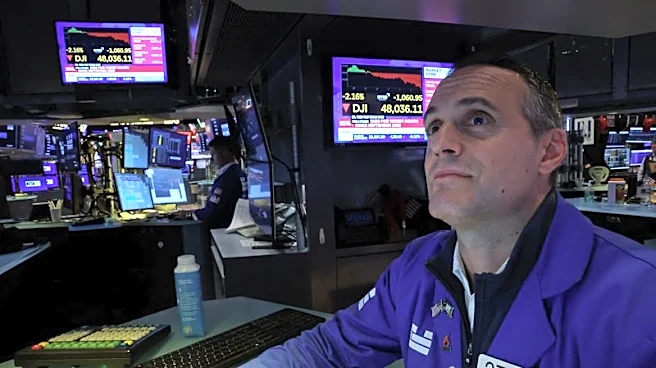
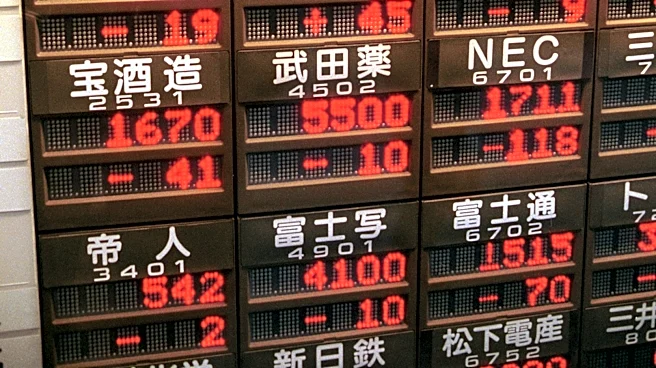
Japanese technology stocks experienced a significant downturn, with the Nikkei index closing 2.78% lower. This decline is attributed to a sell-off in AI-related shares on Wall Street. Major Japanese tech companies, including Advantest and Tokyo Electron,
saw their stock prices fall by over 12%, while SoftBank and Kioxia dropped more than 14%. Concurrently, the cost of protecting technology debt against default has increased, indicating rising credit risk. SoftBank's five-year Credit Default Swap (CDS) reached its widest level since October 2022, and spreads on Oracle, Alphabet, SpaceX, and CoreWeave hit record highs, pushing CoreWeave into distressed territory. This suggests a broader concern about the financial health of technology companies, particularly those heavily invested in AI.
Why It's Important?
The decline in Japanese tech stocks and the rising credit risk in the technology sector highlight a potential shift in investor sentiment towards AI-related investments. The U.S. market's influence on global tech trends is evident, as a sell-off in American AI shares directly impacted Japanese counterparts. This situation could lead to a re-evaluation of investment strategies in the technology sector, with investors potentially becoming more cautious about high-growth, high-risk AI ventures. For U.S. companies like Oracle, Alphabet, and SpaceX, the increased cost of debt protection signals heightened scrutiny from creditors and could impact their borrowing costs and future expansion plans. The distress in CoreWeave further underscores the vulnerability of some tech firms to market fluctuations and credit concerns, potentially affecting the broader U.S. technology landscape.
What's Next?
The immediate future will likely see continued monitoring of AI-related stock performance and credit markets. Investors will be watching for further indications of a sustained downturn or a potential rebound in the technology sector. The increased credit risk could prompt some technology companies to re-evaluate their debt structures and financial strategies. Central banks, particularly the Federal Reserve, will also be observing these trends as they consider future monetary policy decisions, especially with markets pricing in a high probability of a December Fed hike. Any further significant shifts in investor confidence or credit market conditions could influence broader economic stability and investment flows in the U.S. and globally.
Beyond the Headlines
Beyond the immediate financial implications, the events suggest a potential re-calibration of the perceived value and stability of the AI industry. The rapid growth and high valuations of many AI companies have led to concerns about a potential bubble. The current market reaction could be an early indicator of a more cautious approach to AI investments, moving away from speculative growth towards more sustainable and profitable models. This could lead to a consolidation within the AI sector, with stronger, more established companies weathering the storm while less stable ventures face significant challenges. The interconnectedness of global financial markets means that a significant shift in one major economy, like the U.S., can have ripple effects across the world, influencing investment patterns and economic policies.