







What's Happening?
The global demand for matcha, a stone-ground powder made from shade-grown green tea leaves, has outpaced the supply of Japanese tencha, the raw material for matcha. This imbalance, particularly evident in 2024, led to rationing at several Kyoto tea houses
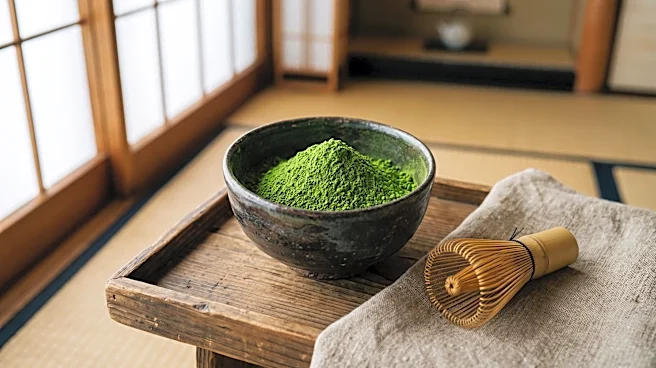
and sharp price increases throughout 2025. Consequently, the market is now flooded with opportunistic fakes, making it increasingly difficult for consumers to identify authentic, high-quality Japanese matcha. The term 'ceremonial grade,' often used in Western markets, is not a legal or regulated classification in Japan, leading to its misuse by dishonest sellers. Authentic Japanese matcha is distinguished by its vivid jade color, fresh aroma, talc-like texture, and transparent origin information, ideally naming the prefecture, town, or farm of production. Key regions for quality matcha include Uji (Kyoto), Nishio (Aichi), Kagoshima, and Shizuoka.
Why It's Important?
The proliferation of fake matcha poses significant challenges for U.S. consumers and the specialty tea market. Consumers risk purchasing inferior products that do not offer the authentic taste, health benefits, or quality associated with genuine Japanese matcha. This can lead to dissatisfaction and a devaluation of the product category. For U.S. businesses, including tea shops, cafes, and retailers, ensuring the authenticity of their matcha supply is crucial for maintaining reputation and consumer trust. The lack of clear international standards for matcha grading, particularly the unregulated use of terms like 'ceremonial grade,' creates a confusing marketplace. This situation underscores the need for greater transparency in sourcing and labeling within the specialty food and beverage industry, impacting how U.S. importers and distributors vet their suppliers and educate their customers about product authenticity.
What's Next?
Consumers and businesses in the U.S. will need to become more discerning in their matcha purchases, focusing on verifiable signals of quality rather than marketing terms. This includes scrutinizing product labels for specific origin information (prefecture, town, or farm), harvest dates, and cultivar details. Reputable sellers are likely to emphasize transparency in their sourcing and provide detailed product descriptions. There may be a growing demand for third-party certifications or industry standards to help authenticate Japanese matcha in international markets. Producers in Japan might also increase efforts to protect their product's integrity, potentially through geographical indications or stricter export guidelines. The market could see a bifurcation, with clear distinctions emerging between authentic, high-quality Japanese matcha and lower-grade or counterfeit products, influencing pricing and consumer choices.
Beyond the Headlines
The matcha market's struggle with counterfeits reflects a broader issue in the global trade of specialty agricultural products, where high demand for unique items often attracts fraudulent imitations. This situation highlights the tension between traditional production methods and the pressures of global commercialization. For Japanese matcha, the integrity of its cultural heritage and centuries-old cultivation practices are at stake. The challenge extends beyond economic loss to the potential erosion of consumer trust in authentic products. This scenario could prompt a re-evaluation of how traditional food products are protected and marketed globally, potentially leading to stronger international collaborations on intellectual property rights and consumer education. It also underscores the importance of informed consumerism, where buyers actively seek knowledge about product origins and quality indicators to make responsible purchasing decisions, thereby supporting ethical producers and preserving cultural authenticity.