







What's Happening?
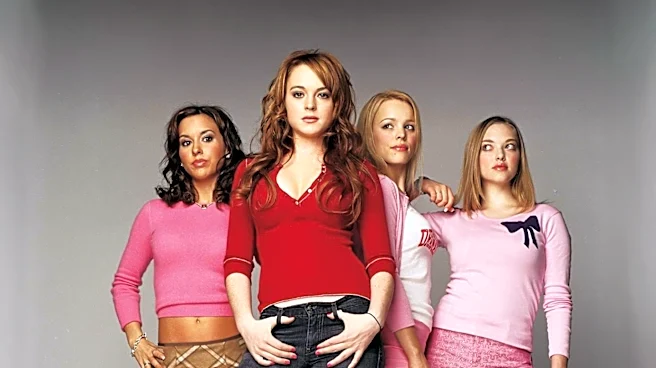
Actress Amanda Seyfried has publicly discussed her reasons for turning down the role of Gamora in Marvel's 'Guardians of the Galaxy' franchise. In a resurfaced interview, Seyfried stated that she believed the film, with its talking tree and raccoon characters,
had a high chance of being a failure and could potentially 'ruin her career.' The role ultimately went to Zoe Saldana, who has since reprised it in multiple Marvel Cinematic Universe films. Seyfried elaborated on her decision during a career retrospective with the SAG-AFTRA Foundation, indicating that her choice was 'obvious' at the time. Despite the film's subsequent success, grossing $773.3 million worldwide, Seyfried maintains she does not regret her decision, citing personal preferences and family considerations.
Why It's Important?
This revelation offers insight into the complex decision-making process actors face when considering major film roles, particularly within established franchises like the Marvel Cinematic Universe. Seyfried's perspective highlights the career risks perceived by actors, even when presented with opportunities that later prove to be highly successful. Her comments underscore the subjective nature of career choices and the balance between potential blockbuster success and personal comfort or artistic preference. For the entertainment industry, it illustrates how initial perceptions of unconventional projects can differ significantly from their eventual impact and reception. It also sheds light on the demands of superhero roles, such as extensive makeup, stunts, and green screen work, which can be deterrents for some performers.
What's Next?
While Amanda Seyfried has firmly stated her lack of interest in future superhero roles unless they involve minimal physical demands, her continued career trajectory will likely be observed for the types of projects she chooses. Her focus on roles that offer more 'human' interactions and less reliance on special effects suggests a preference for character-driven narratives. The success of 'Guardians of the Galaxy' without her participation, and her continued success in other genres, reinforces the idea that actors can thrive by following their instincts, even if it means passing on highly visible opportunities. This situation may encourage other actors to prioritize personal and artistic fulfillment over perceived blockbuster potential, potentially influencing casting decisions and project development in Hollywood.
Beyond the Headlines
Seyfried's candidness about her decision touches upon broader themes within the film industry, including the pressure on actors to conform to certain blockbuster molds and the often-unpredictable nature of a film's success. Her concern that a potentially 'bad' film could 'ruin her career' reflects the high stakes involved in Hollywood, where a single misstep can significantly impact an actor's standing. Furthermore, her aversion to extensive makeup, stunts, and green screen work speaks to a desire for more grounded, tangible acting experiences, which contrasts with the increasing prevalence of CGI-heavy productions. This highlights a potential divide between actors who embrace the technological advancements of modern filmmaking and those who prefer more traditional, performance-focused roles, raising questions about the evolving craft of acting in an increasingly digital cinematic landscape.