




What's Happening?
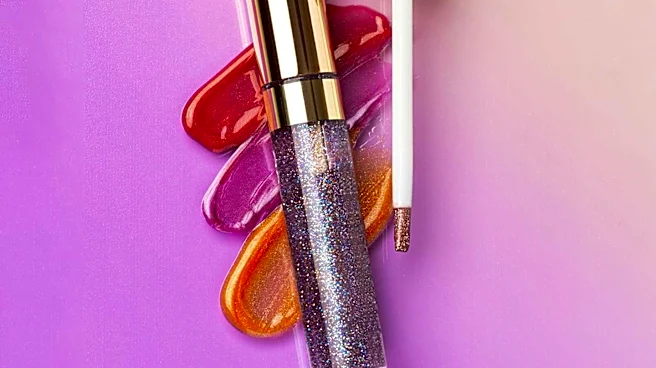
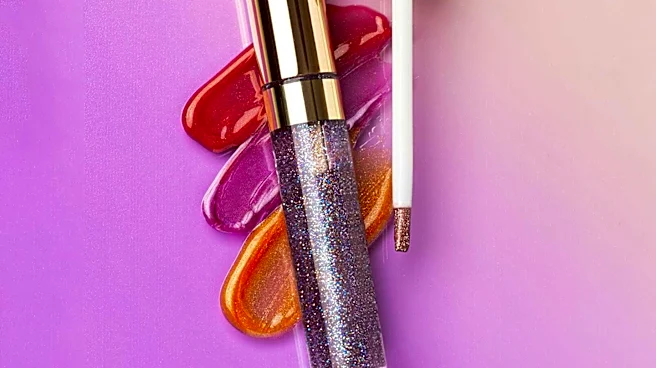
Jelly lip oils are emerging as a popular beauty product, offering a unique combination of hydration and cosmetic enhancement for the lips. These ultra-emollient products are designed to deliver a glossy, mirror-like finish, which contributes to the appearance
of fuller and more hydrated lips. Beyond their aesthetic benefits, jelly lip oils are also noted for their plumping effect and ability to smooth fine lines. Key ingredients often include moisturizing agents like Kakadu Plum, Japanese Sumac, and Sweet Cherry Oil, as highlighted by products such as the Pokémon x ColourPop Evolution Collection. The formulation of these lip oils typically results in a non-sticky, gel-like texture, making them comfortable to wear while providing long-lasting hydration. This trend signifies a shift towards lip products that prioritize both care and visual appeal, moving beyond traditional lip glosses to offer more comprehensive benefits.
Why It's Important?
The rise of jelly lip oils reflects a significant trend in the U.S. beauty industry, where consumers are increasingly seeking multi-functional products that offer both cosmetic benefits and skincare advantages. This demand is driving innovation among beauty brands, leading to the development of formulations that combine hydration, plumping, and a glossy finish. For consumers, these products offer a convenient way to achieve a desired aesthetic while also caring for their lip health. The emphasis on ingredients like Kakadu Plum and Sweet Cherry Oil also aligns with a broader consumer preference for natural and beneficial components in their beauty routines. This trend could impact the market share of traditional lip glosses and balms, as jelly lip oils provide a more comprehensive solution. Brands that successfully integrate these features are likely to gain a competitive edge, influencing product development and marketing strategies across the cosmetics sector.
What's Next?
The growing popularity of jelly lip oils is likely to lead to an expansion of product offerings from various beauty brands. Consumers can anticipate a wider range of shades, finishes, and ingredient combinations as companies compete to capture market share. There may also be an increased focus on sustainable and ethically sourced ingredients, aligning with evolving consumer values. Furthermore, the success of jelly lip oils could inspire the development of similar hybrid products in other beauty categories, blurring the lines between makeup and skincare. Retailers will likely adjust their inventory to feature more of these trending products, potentially dedicating more shelf space to lip oils and similar innovative formulations. The beauty industry will continue to monitor consumer response to these products, which will inform future research and development efforts.
Beyond the Headlines
The popularity of jelly lip oils extends beyond mere cosmetic appeal, touching upon deeper cultural and psychological aspects of beauty. The desire for 'fuller' and 'hydrated' lips often reflects prevailing beauty standards, which are continuously shaped by social media and celebrity influence. The non-sticky, comfortable texture addresses a common complaint about traditional lip glosses, indicating a consumer preference for products that enhance natural beauty without discomfort. This trend also highlights the increasing sophistication of the beauty consumer, who now expects products to deliver tangible benefits beyond superficial aesthetics. The integration of skincare ingredients into makeup products signifies a holistic approach to beauty, where self-care and enhancement are intertwined. This shift could lead to a re-evaluation of what constitutes 'makeup' versus 'skincare,' potentially fostering a more integrated and health-conscious beauty regimen for many.